Who is the Best Pixel Artist?
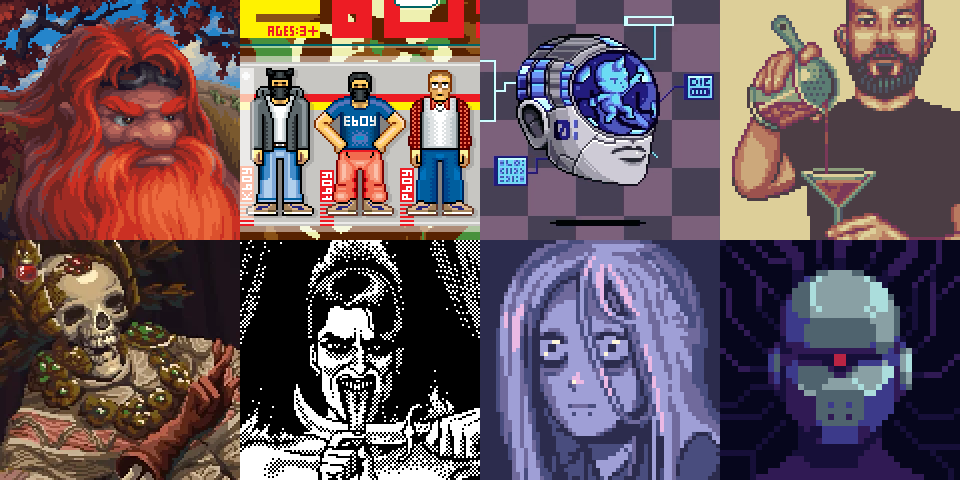
Earlier this year I wrote an article about how to hire a pixel artist, where I laid out all the questions you should ask yourself (and your potential pixel artist) to determine who is the best fit for you. While the article was filled with useful information, such as defining your project goals, evaluating a pixel artist’s portfolio, and even how much you should expect to pay, what it didn't answer was an even simpler question: where do you actually find the best pixel artists? After all, there are hundreds of them now, and the overwhelming majority are hobbyists or content creators, more interested in racking up TikTok views with their time-lapse videos than following a creative brief for a multi-million-dollar client.
So as a complement to that article, I've put together a list of the top currently working pixel artists in the world as of 2026. Consider it a starting point for discovering some of the very best pixel artists working today. The truth is there is no single “best pixel artist”, but there are pixel artists who are arguably the best at what they do. Each artist on this list has a distinct set of skills, an established history of professionalism and, of course, creates beautiful pixel art.
Click on any name below to jump to the pixel artist’s respective section:
Henk Nieborg - The Grizzled Pixel Art Veteran (1990)
eBoy - Putting Bitmap on the Map (1997)
Paul Robertson - The Animation God (2006)
Jude Buffum - The Art Director’s Pixel Artist (2007)
Thomas Feichtmeir - The Pixel Architect (2010)
Uno Moralez - The Underground Pixel Auteur (2011)
Pedro Medeiros - The Gameplay Physicist (2012)
Slynyrd - The Pixel Professor (2015)
Henk Nieborg - The Grizzled Veteran (1990–present)
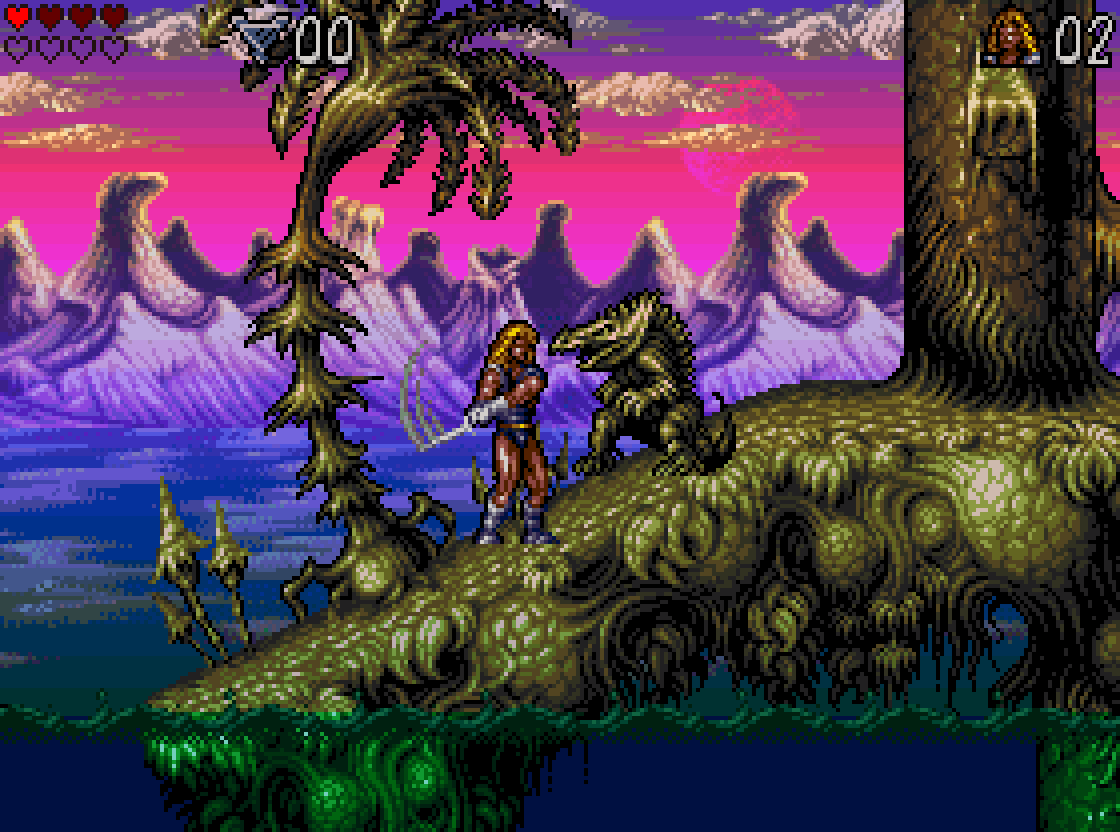
Lionheart, 1993
Henk Nieborg began his pixel art career at a time when the medium was still being invented in real time. Even then, his techniques, color usage, and visual language stood out as some of the best of its era, helping define what high-end pixel art could look like on early home computers and consoles.
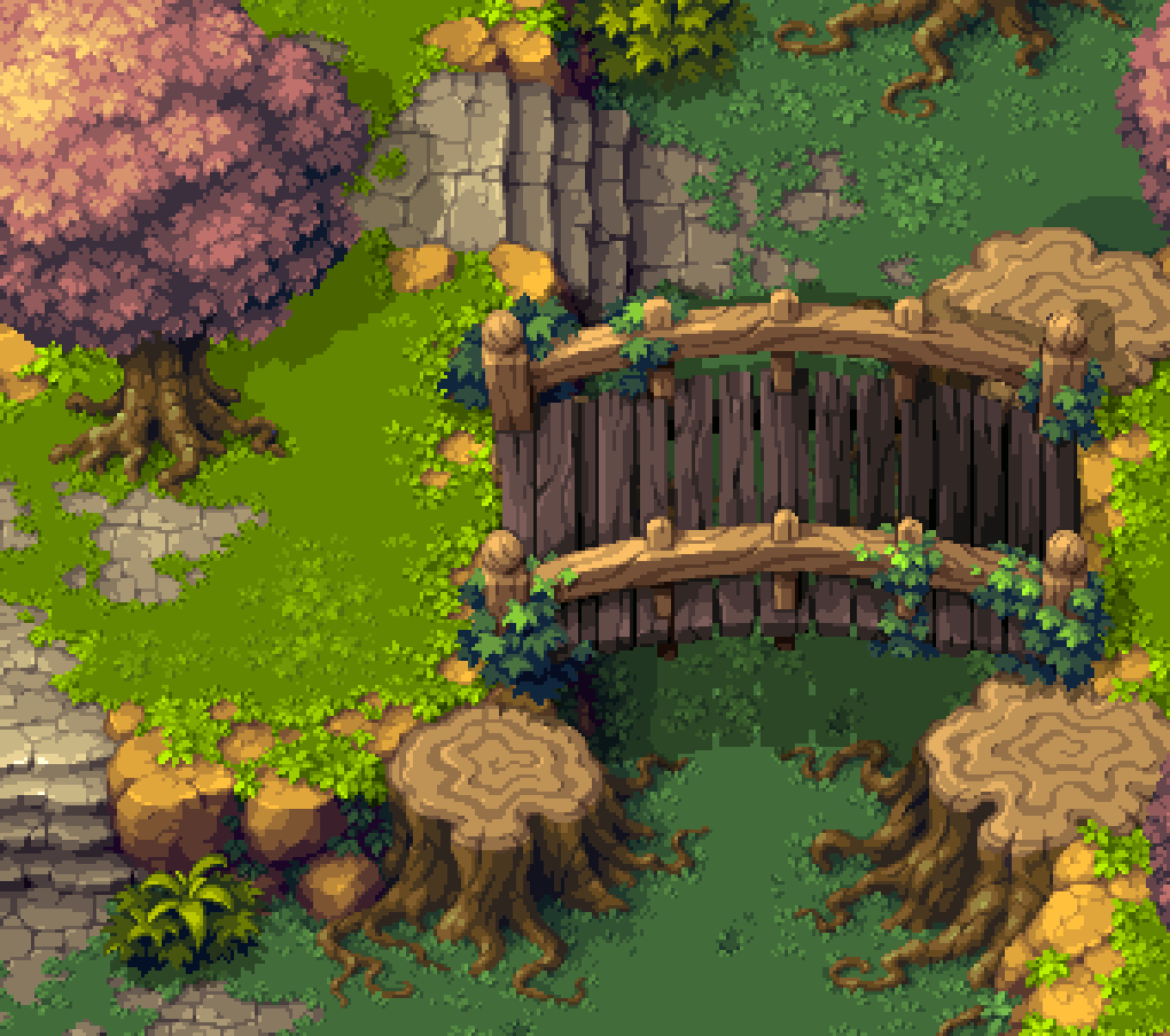
Battle Axe, 2021
More than 35 years later, that foundation has carried forward into modern production, where Henk continues to create some of the most historically authentic, game-centric pixel art being made today.
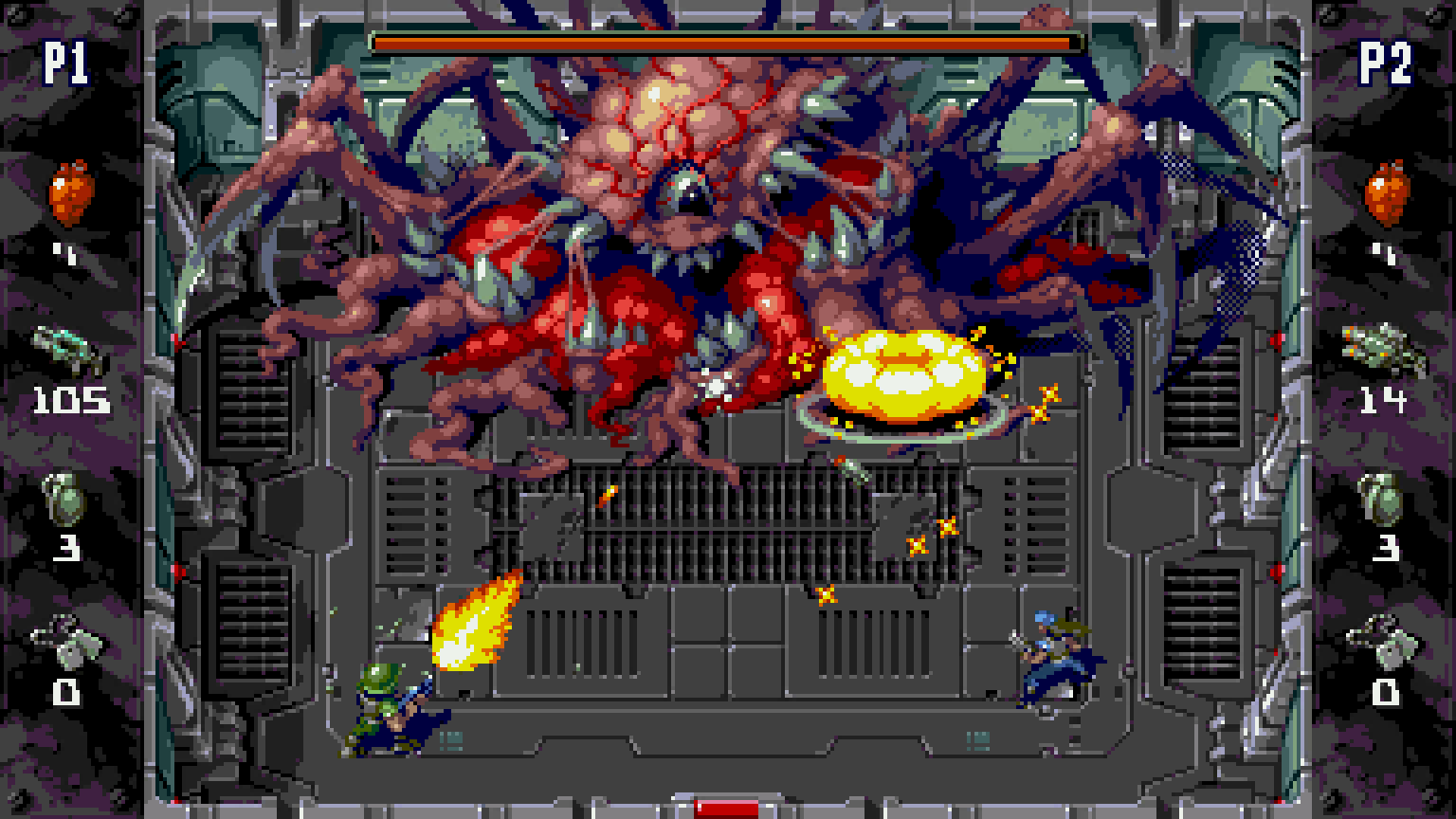
Xeno Crisis, 2019
His recent work demonstrates a rare continuity: visuals that feel true to their original hardware inspirations while meeting contemporary expectations for polish, scale, and budget, including contributions to major IP such as Terminator. Few pixel artists can claim that kind of uninterrupted relevance, and fewer still are producing work at this level decades into their careers.
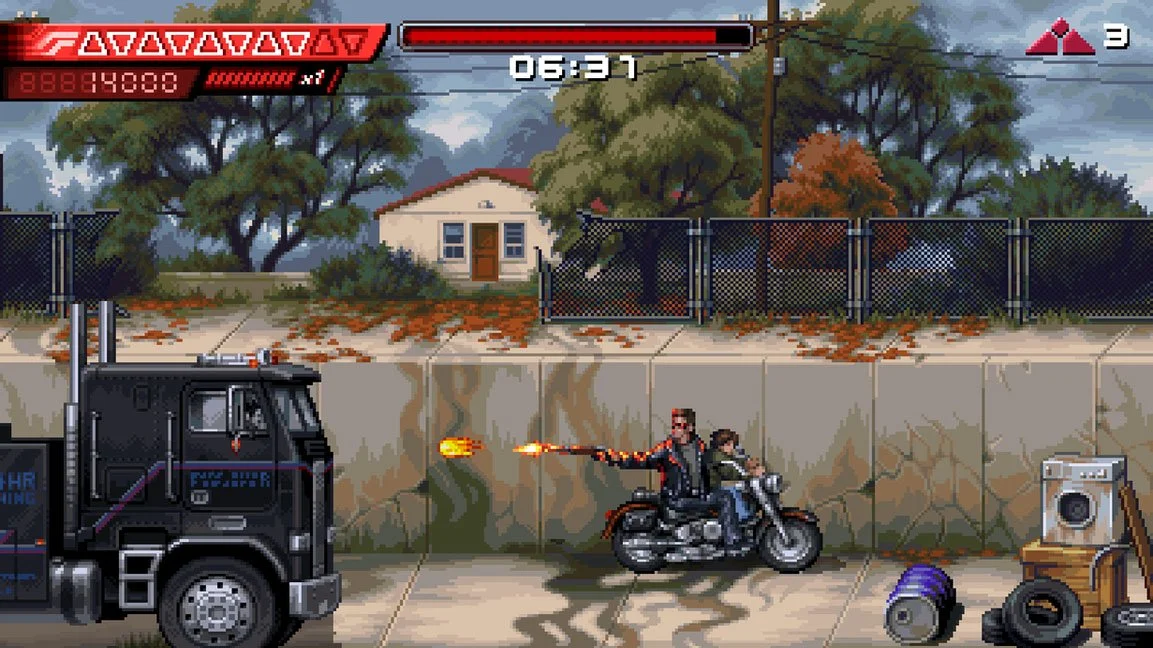
Terminator 2D: No Fate, 2025
Best for:
Premium retro-style games that look historically accurate while still meeting modern production standards. If you ever wanted to work with one of the original generation of pixel artists, from a time when all commercial games were built this way, Henk may be your last realistic opportunity to do so. That said, he is not a good fit for small or casual projects. His work is structured around full-scale game production, long timelines, and serious budgets. However, if you are a large publisher or IP owner, Henk is one of the clearest choices available.
URLs:
eBoy - Putting Bitmap on the Map (1997–present)
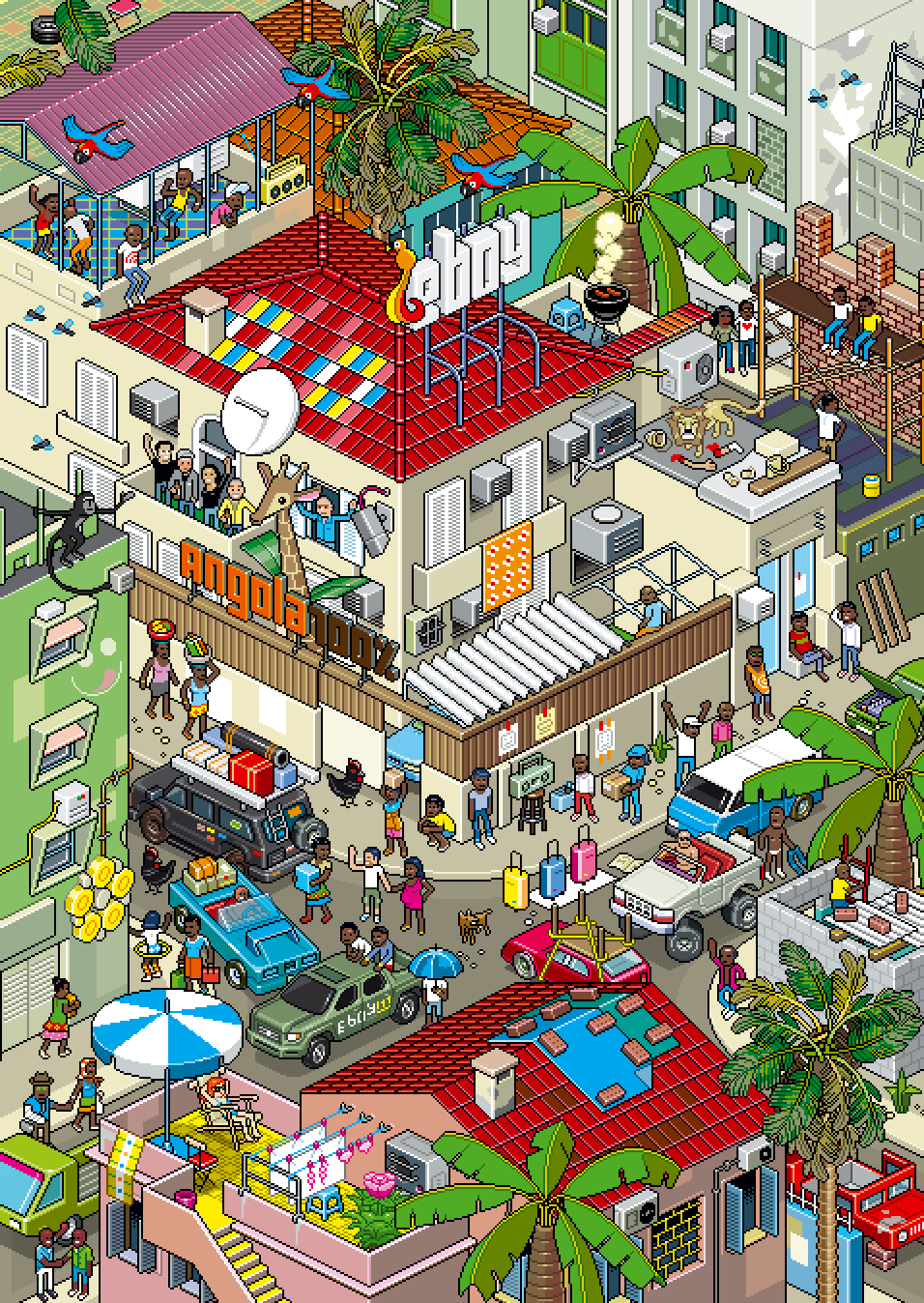
Isometric cityscape illustration. Client: Creation Angola
Steffen Sauerteig, Svend Smital, and Kai Vermehr, better known as eBoy, were the first pixel art studio to find sustained success outside of the video game industry. Their illustrations have been widely used across editorial, advertising, branding, and print, often at large physical sizes where pixel art is expected to fail. Instead, the work holds together precisely because of its disciplined construction.
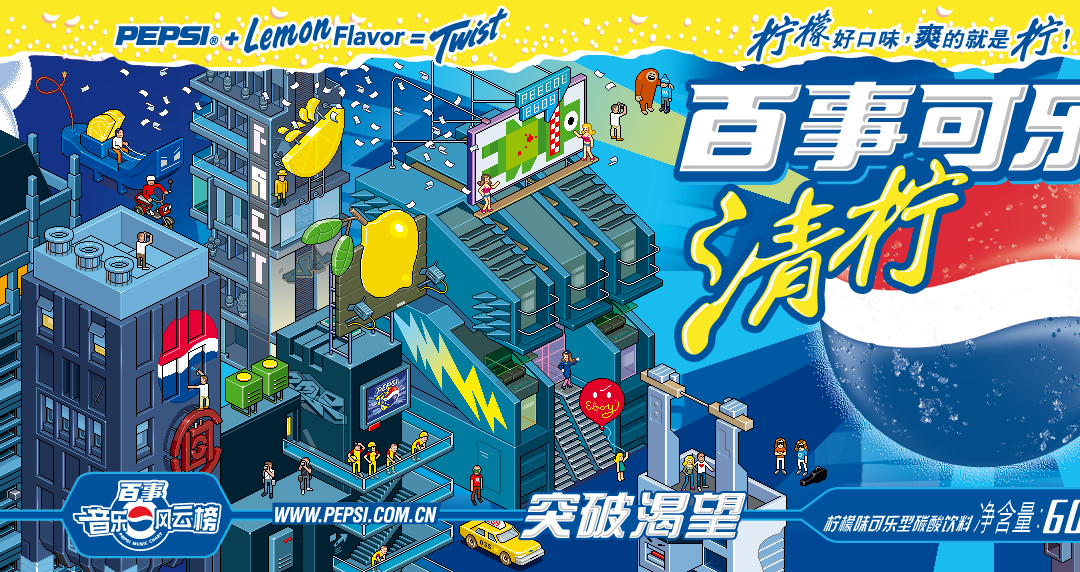
Client: Pepsi
The emergence of eBoy happened in Berlin, just as pixel art in video games was being leapfrogged by 3D polygon graphics toward the end of the 1990s. They saw pixel art as a visual language worth preserving and, from the outset, treated it as an illustration medium capable of handling scale, density, and complex information.
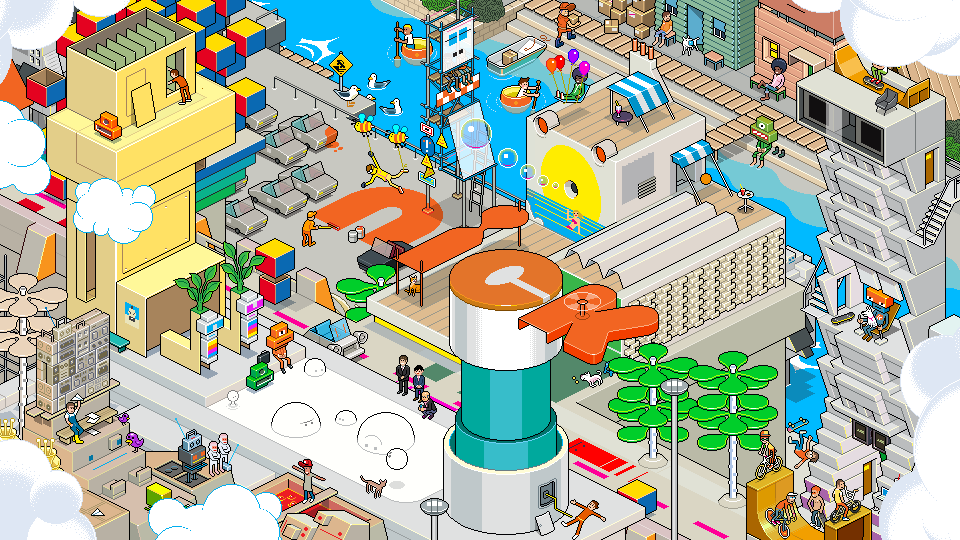
Client: Nickelodeon
Their signature works, which they coined “Pixoramas,” are large, meticulously constructed scenes built from strict isometric grid systems and modular components. These images emphasize systems over characters: cities, infrastructure, signage, crowds, and visual noise, all rendered with extreme consistency and internal logic. The work functions less like a game scene and more like an illustrated architectural map built from cubes.
Best for:
Dense, information-rich pixel art illustration for advertising, editorial, or other large-format commercial use.
Paul Robertson - The Animation God (2006–present)
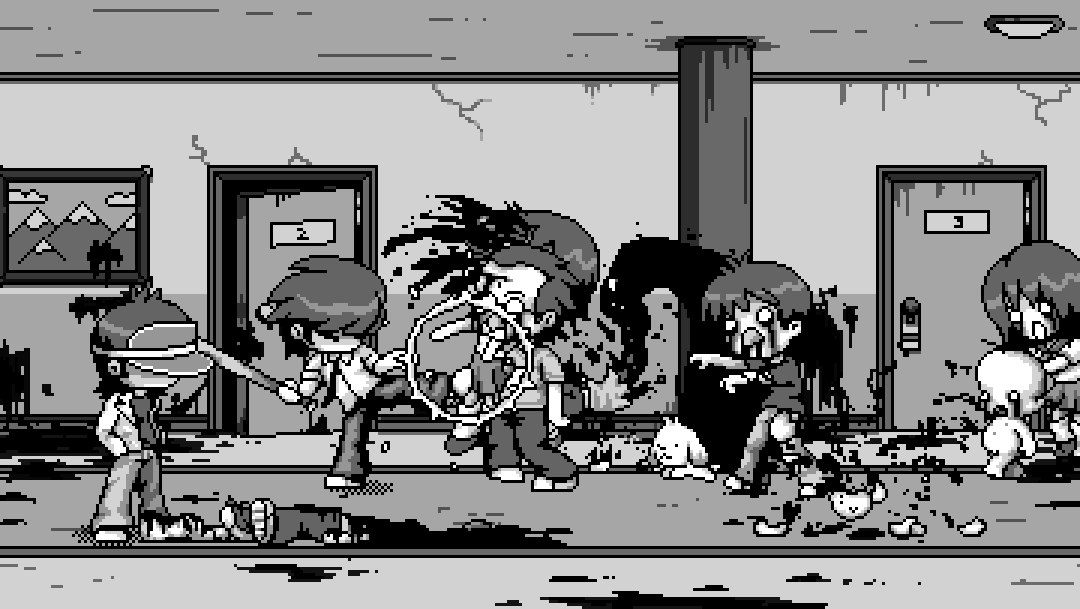
Pirate Baby’s Cabana Battle Street Fight 2006
When it comes to pixel art animation, Paul is the undisputed GOAT. When his 12 minute short “Pirate Baby’s Cabana Battle Street Fight 2006” debuted at the Next Wave Festival in Melbourne, it combined the visual language of arcade beat ‘em ups with the hyper-stylized action of Japanese anime to push animation far past what any pixel art games had previously attempted.
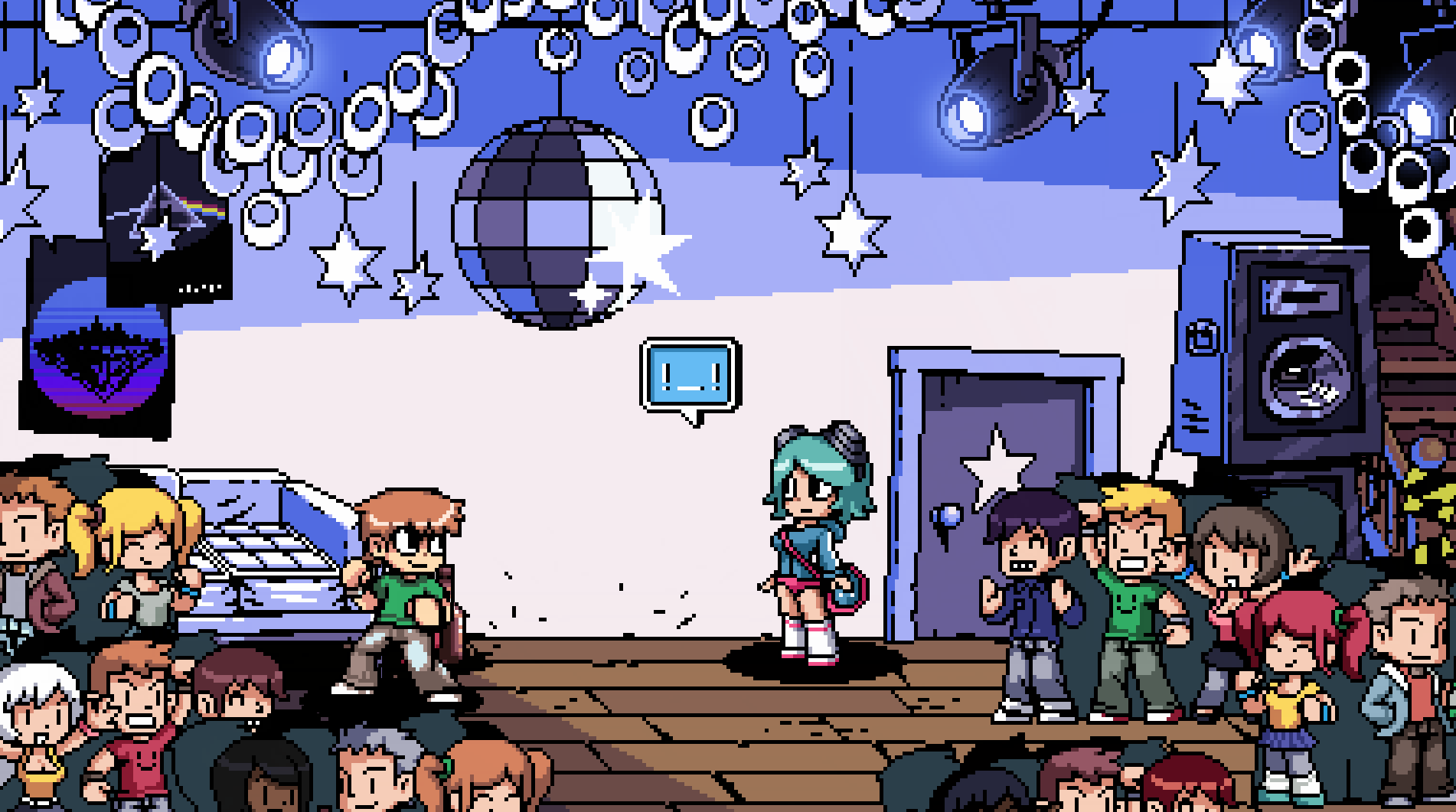
Scott Pilgrim vs. the World, 2010
It was only fitting that Ubisoft later enlisted Robertson to create the pixel art and animation for the 2010 video game adaptation of Scott Pilgrim vs the World, which brought that next level pixel art animation back into the video game realm. It’s a great example of how ideas developed outside of an industry can push a creative discipline forward, then bring those advances back to fundamentally change how we think about what that medium is capable of.
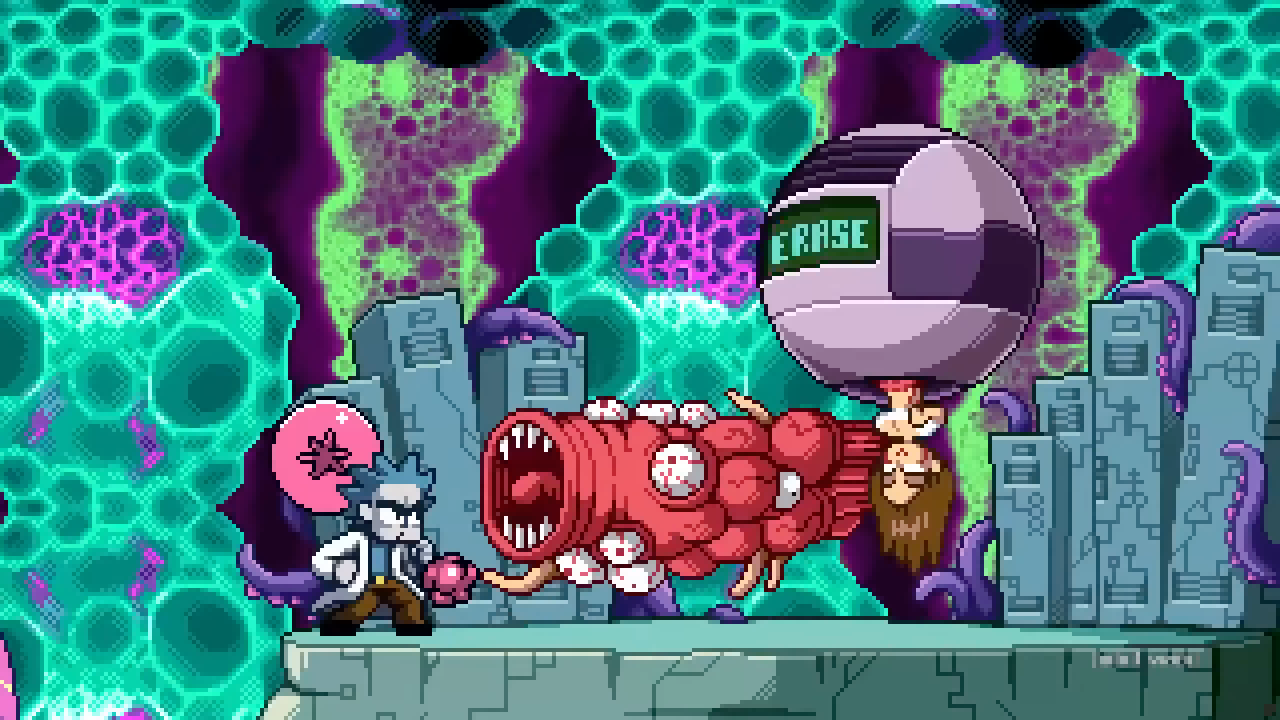
Rick + Morty in the Eternal Nightmare Machine, 2021
Paul’s commercial work, even outside of gaming, demonstrates that his approach to animation succeeds at any scale. Whether it’s 5-second broadcast bumpers for Nickelodeon, a four-minute music video for Architecture in Helsinki, or the seventeen-minute pixel art short film Rick and Morty in the Eternal Nightmare Machine for Adult Swim, his animation relies on expressive motion, ludicrous character forms, and pop culture self-awareness.
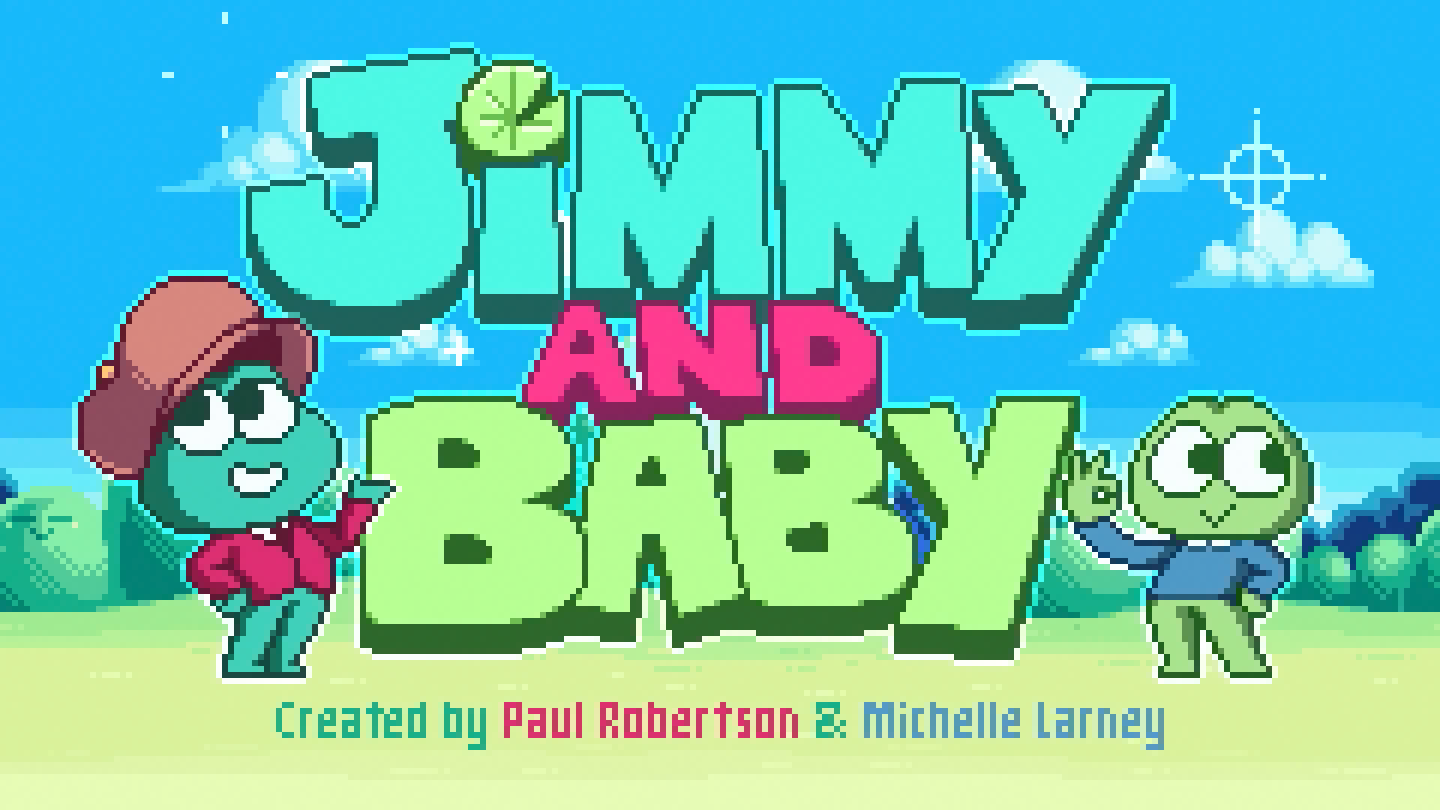
Jimmy and Baby, 2024
Best for:
Pixel art video games where expressive, fluid animation carries the feel of play, especially beat ’em ups and action-heavy titles. Film or television projects that want pixel art animation to feel like those same games, driven by physical motion, exaggerated timing, and combat-forward energy rather than static or minimalist movement.
URLs:
https://linktr.ee/probzzzz
https://probertson.tumblr.com/
Jude Buffum - The Art Director’s Pixel Artist (2007–present)
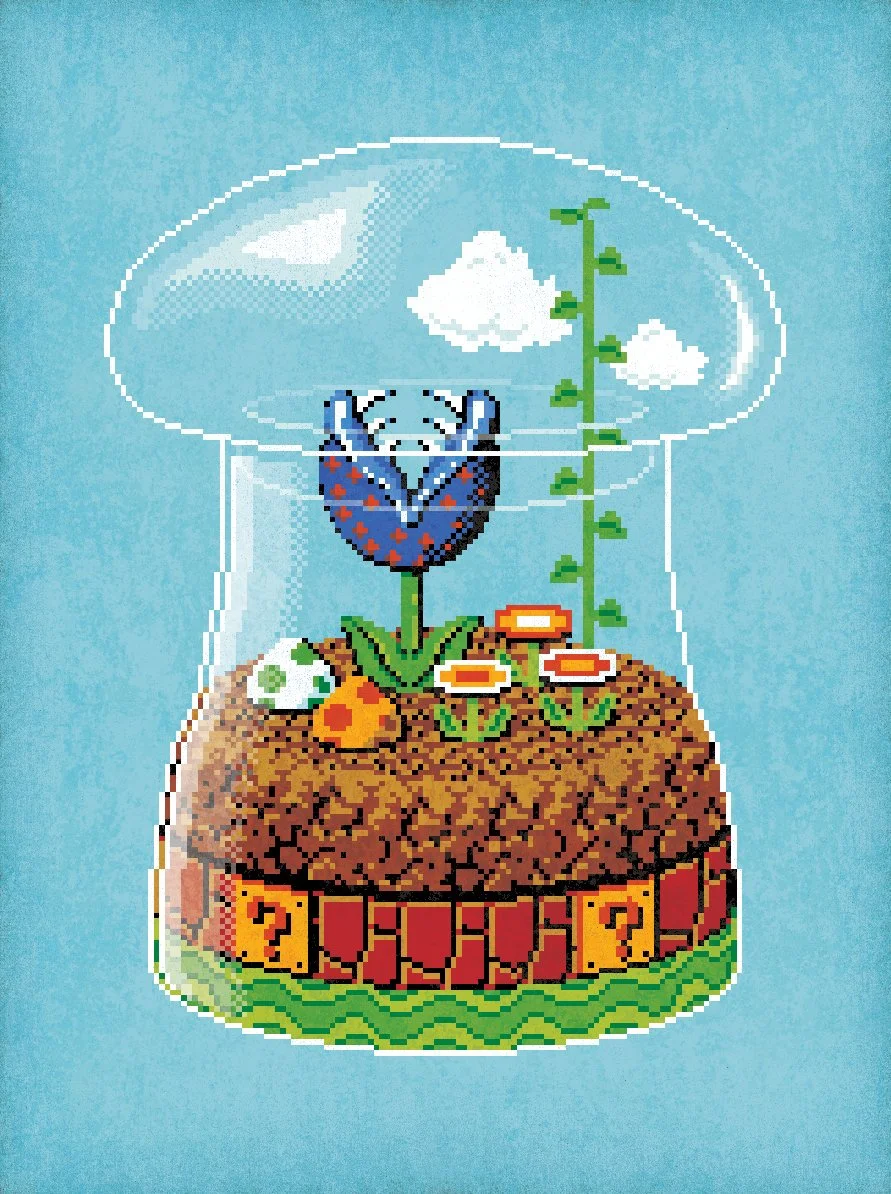
Mushroom Terrarium, 2011. Gallery: Giant Robot
Jude Buffum began working as a pixel artist in 2007, several years into a professional graphic design and illustration career. From the outset, his approach treated pixel art as a flexible illustration language rather than a game production constraint, which naturally led to pixel art illustration work in editorial, consumer products, and advertising rather than traditional game pipelines.
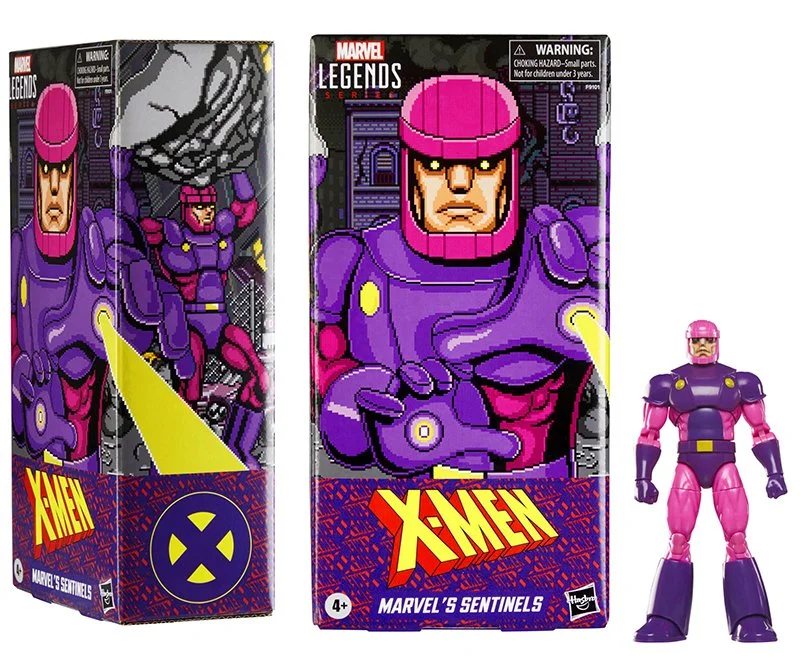
Pixel art packaging for Marvel Legends action figures. Client: Hasbro
Unlike most pixel artists, whose experience is concentrated in games, Jude’s pixel art has appeared across a wider range of commercial contexts than almost anyone currently working in the medium. His work has graced retail products, magazine and book covers, advertising campaigns, social media, and brand systems. Art directors hire Jude Buffum when they need pixel art that functions as a cultural reference, or as a way to visually communicate technology, games, or digital concepts outside of an actual video game.

Pixel art gift cards. Client: Target
A key differentiator in Buffum’s work is typography. Most art directors know that pixel art can easily clash with traditional typefaces, but thanks to Jude’s background in graphic design and art direction, he brings a skillset most pixel artists do not: the ability to integrate pixel art illustration with 8-bit typographic logos, headlines, and other copy.
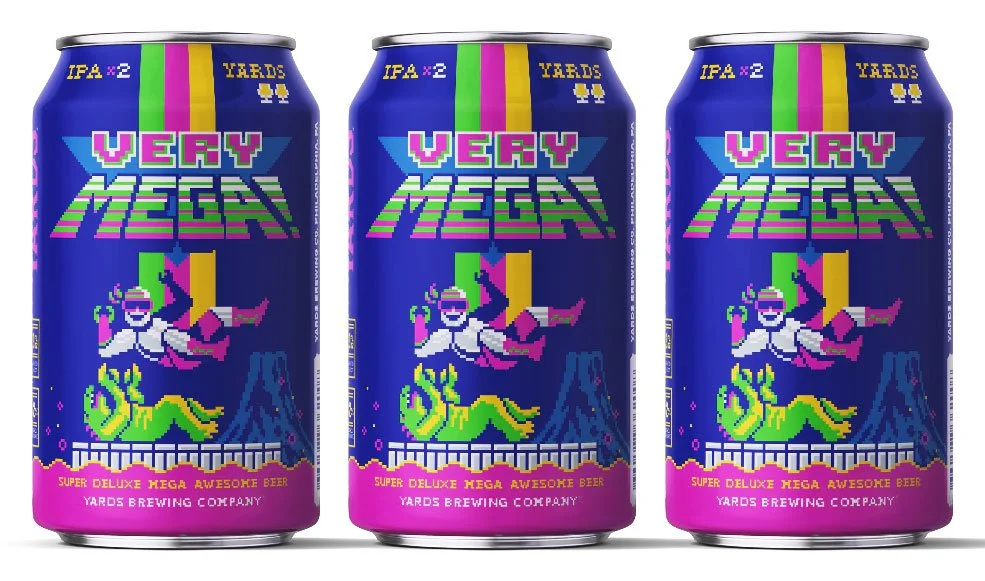
Pixel art packaging. Client: Yards Brewing Company
While Jude has worked on video games for Sony, multiple advertising-driven games for brands like Coach, Adult Swim, and Taco Bell, and even built a custom game from scratch for Psycho Bunny, his career demonstrates how pixel art can operate as a professional commercial illustration style across nearly every category where art directors commission work, well beyond traditional game development.
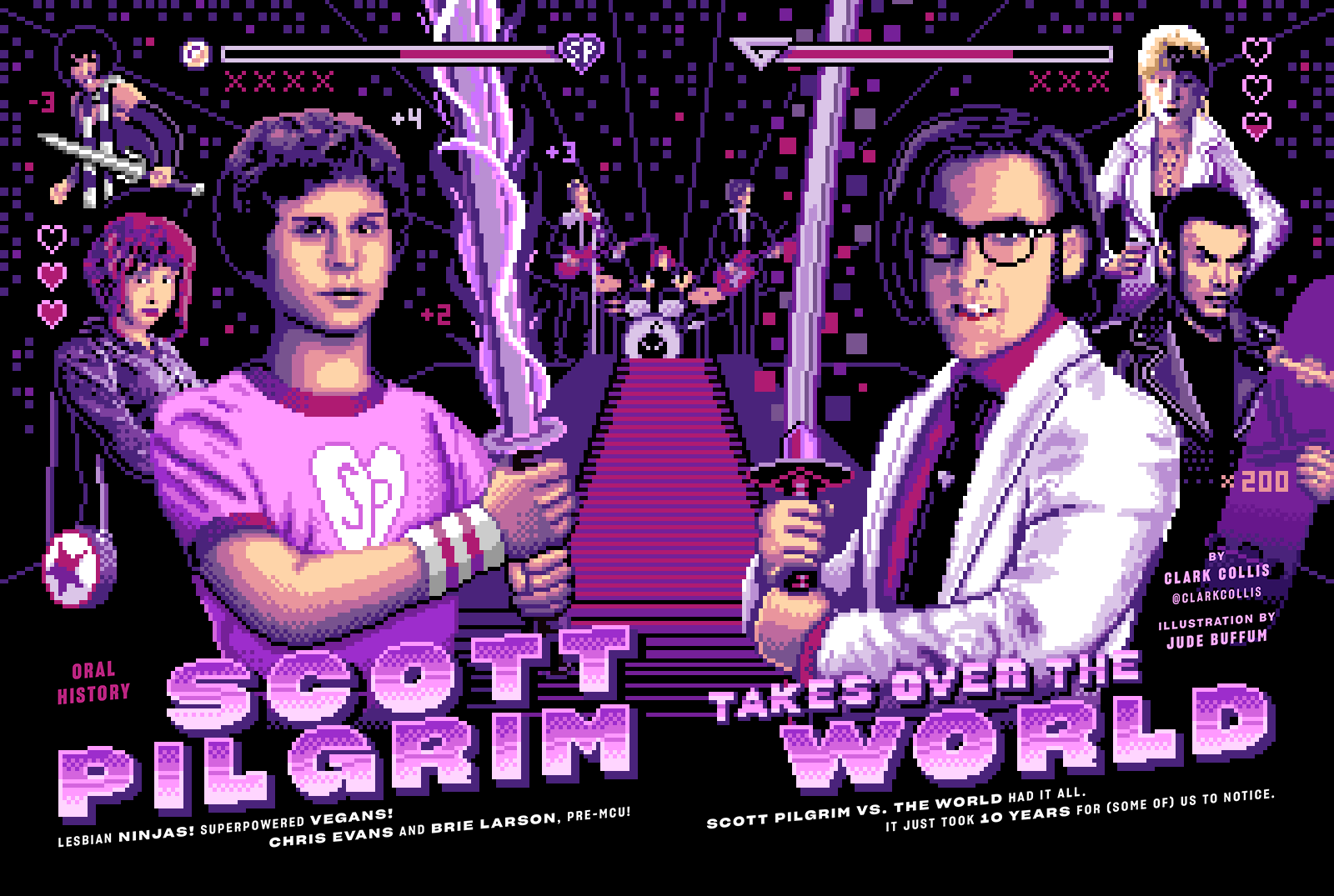
Pixel art and typography for magazine spread. Client: Entertainment Weekly
Best for:
Branded videos games. Editorial, packaging, and advertising projects that require pixel art illustration with a graphic designer’s sensibility. Pixel art portraits. Brand systems and campaigns where typography, layout, approvals, and real-world production constraints matter as much as the pixel art itself.
Thomas Feichtmeir - The Pixel Architect (2010–present)
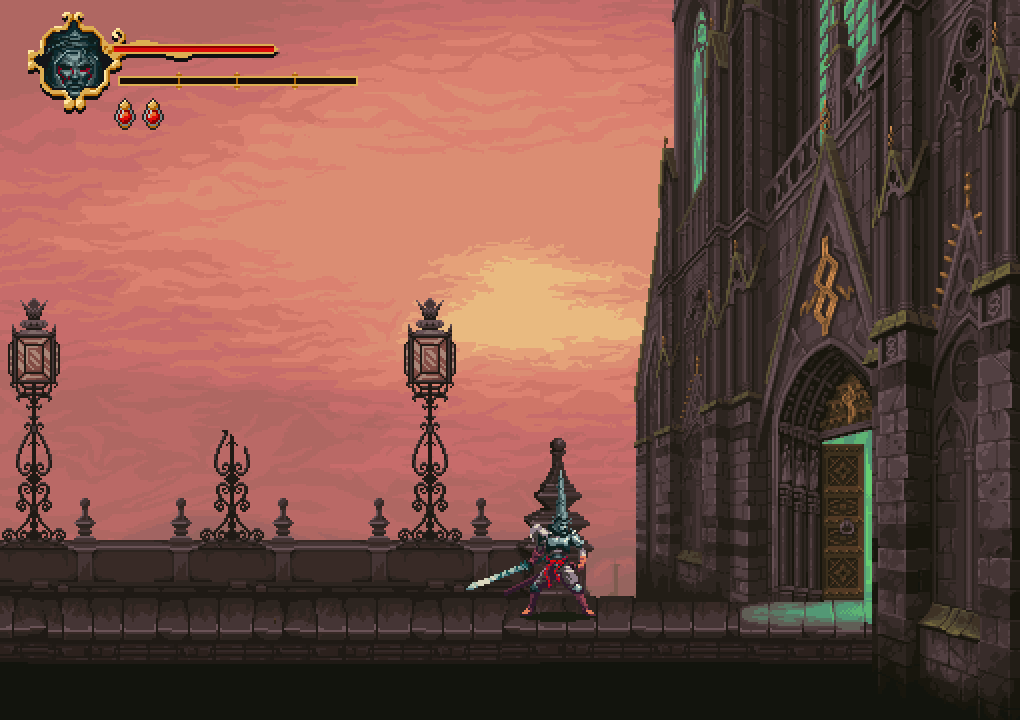
Blasphemous, 2019
Whether he’s consulting on game systems design or constructing literal environments, Thomas Feichtmeir’s pixel art superpower is understanding the architecture of games.
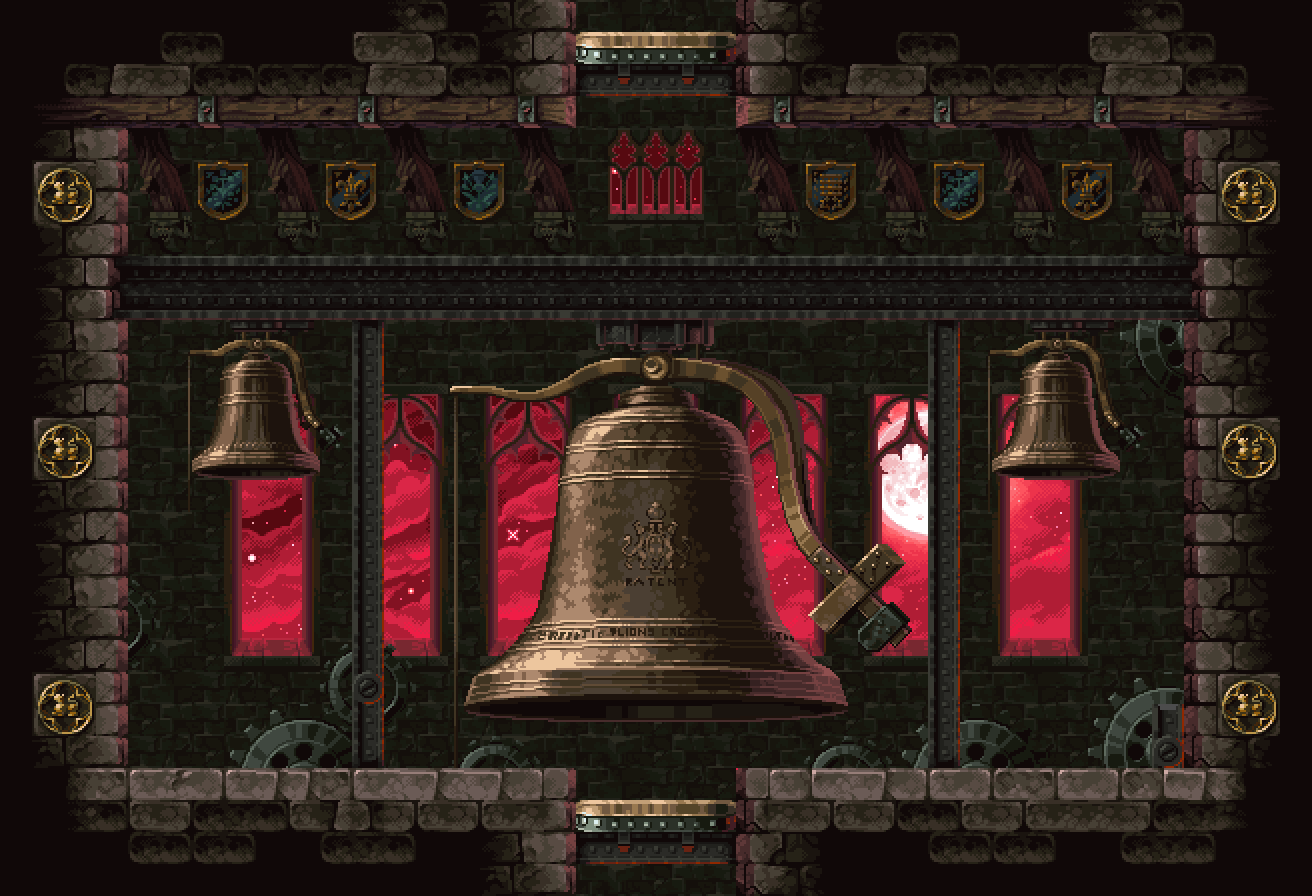
The Mummy Demastered, 2017
His work on The Mummy Demastered, translating real-world film sets into playable “metroidvania” environments, required familiarity with classical architecture, combined with a deep understanding of level design and modular tile systems. This same expertise carried over to Blasphemous, where he contributed architectural elements such as doors, windows, altars, and structural motifs informed by the gothic and baroque styles.
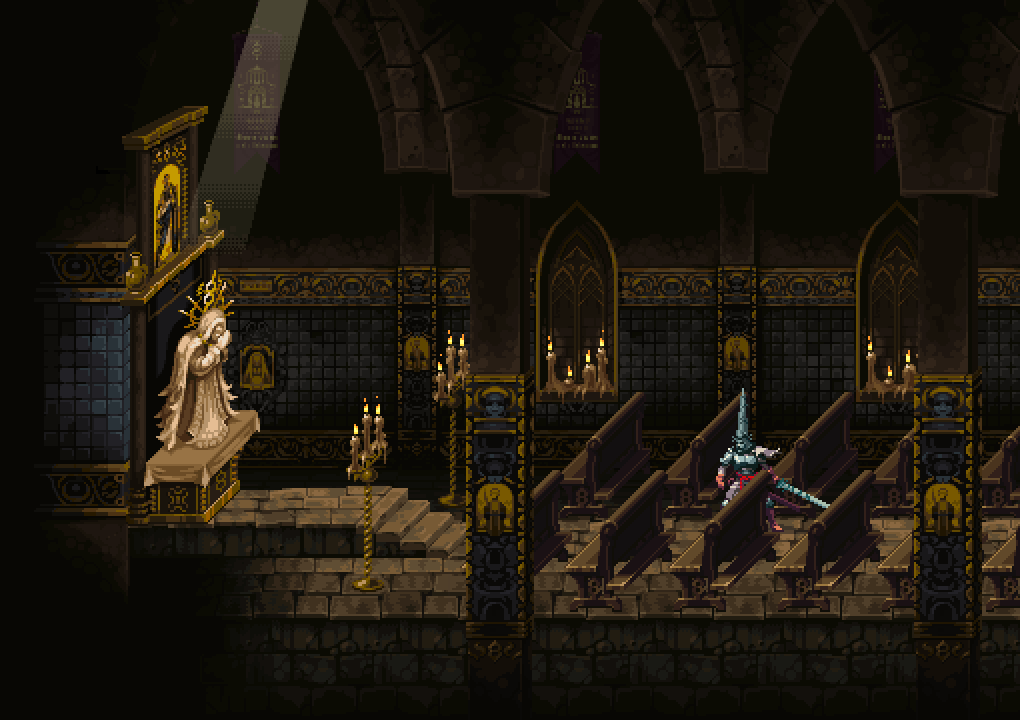
Blasphemous, 2019
Beyond environment design, Feichtmeir has also worked as an art director on game projects including Gestalt: Steam & Cinder, Streets of Rogue 2, and Dome Keeper. In these roles, he has advised teams on UX design, production scope, and pixel art legibility while simultaneously contributing background and tile set art. His work sits at the intersection of environment construction and game systems, where visual design, level structure, and production planning directly affect one another.
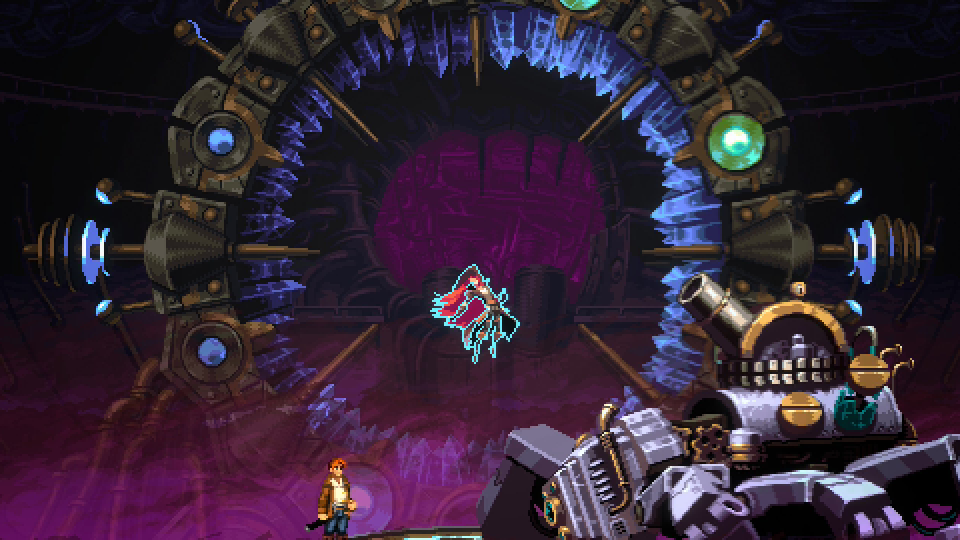
Gestalt:Steam & Cinder, 2024
Best for:
Games that require strong environmental storytelling, painterly backgrounds, imposing architecture, and thoughtfully designed levels.
URLs:
Uno Moralez - The Underground Pixel Auteur (2011–present)

You hire Uno Moralez when you want something deeply strange, unsettling, and unlike anything else in pixel art. His work often reads like pen-and-ink comics filtered through low-resolution digital constraints: stark compositions, obsessive detail, and imagery that feels symbolic rather than decorative. Influenced by underground comics, arthouse cinema, and religious iconography, his pixel art is closer to visual literature than illustration, frequently described as disturbing, hypnotic, and difficult to forget.
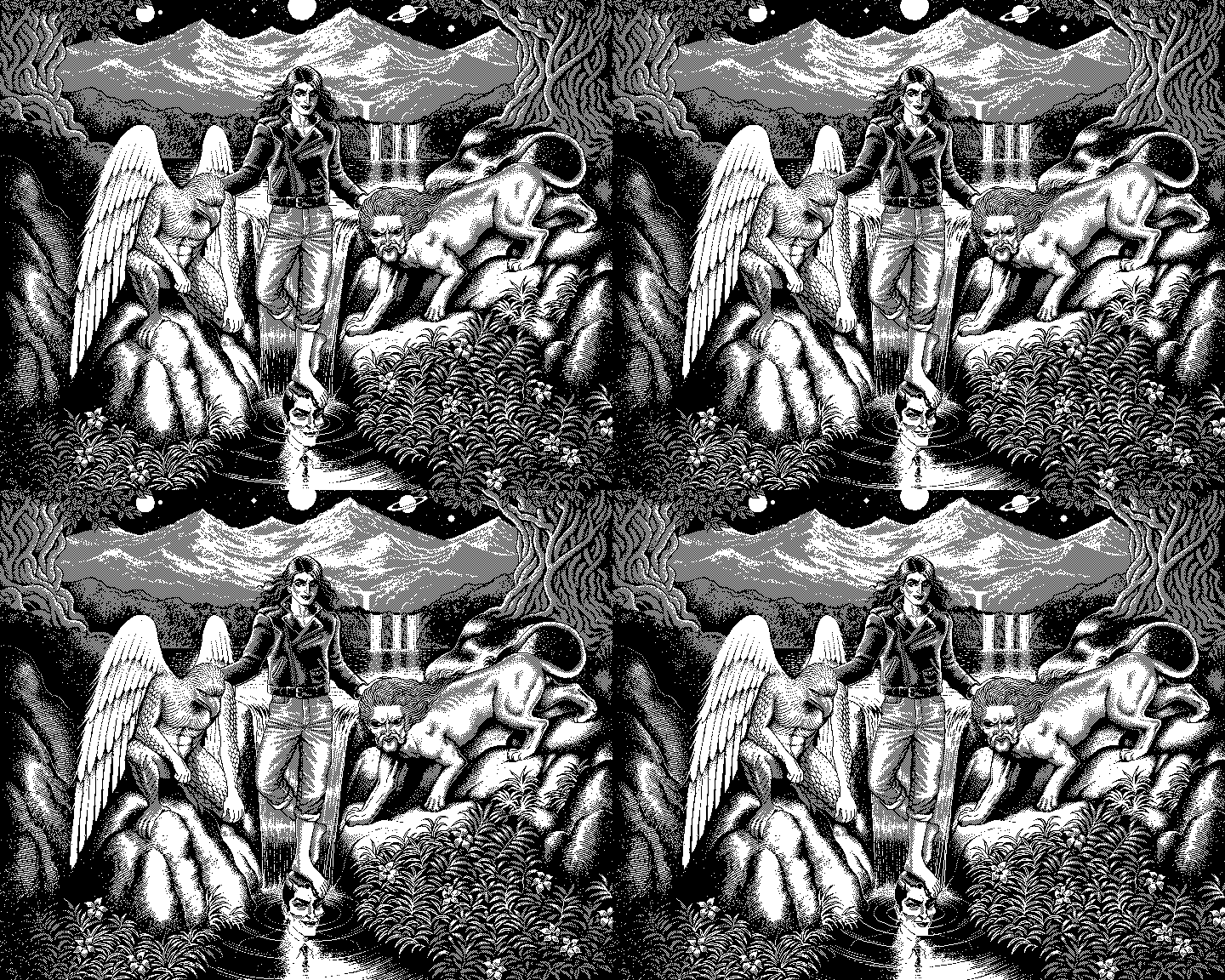
If most pixel art aims to be readable, charming, or nostalgic, Uno’s work aims to be haunting. He is the go-to choice for projects that want pixel art to feel intellectual, uncomfortable, and genuinely experimental rather than cute or retro.
Best for: Album covers, editorial illustration, and art-driven projects that value unsettling or surreal imagery as the primary point of interest.
URLs:
Pedro Medeiros - The Gameplay Physicist (2012–present)
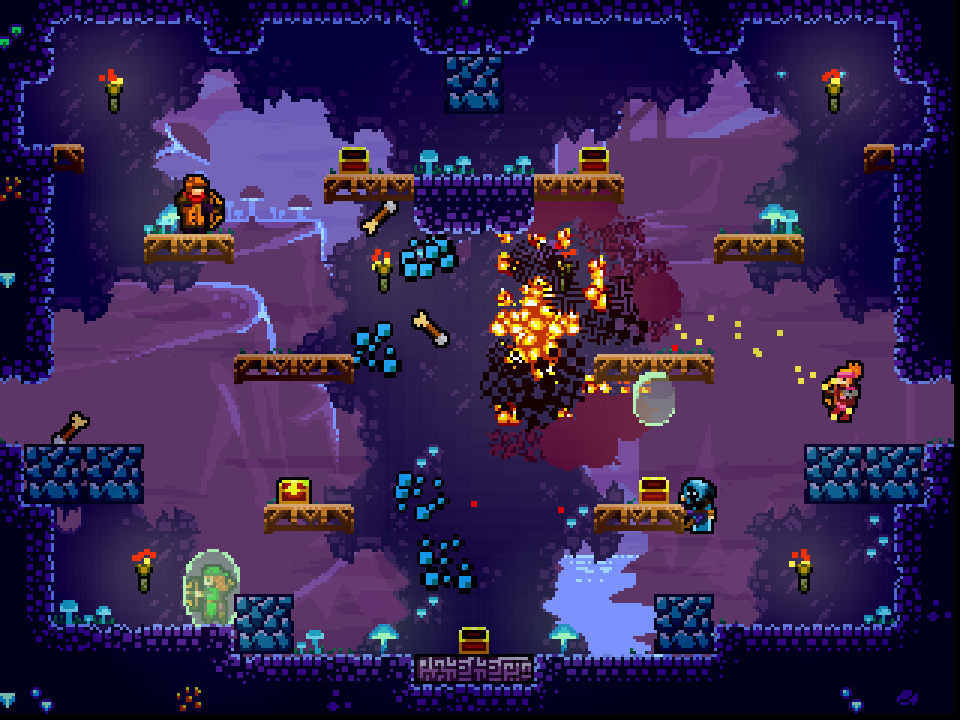
TowerFall, 2013
Pedro Medeiros, known online as Saint11, is a pixel artist whose work cannot be separated from how games feel to play. From his earliest releases, including Out There Somewhere (2012), his focus on how animation, physics, and responsiveness work together have defined his career.
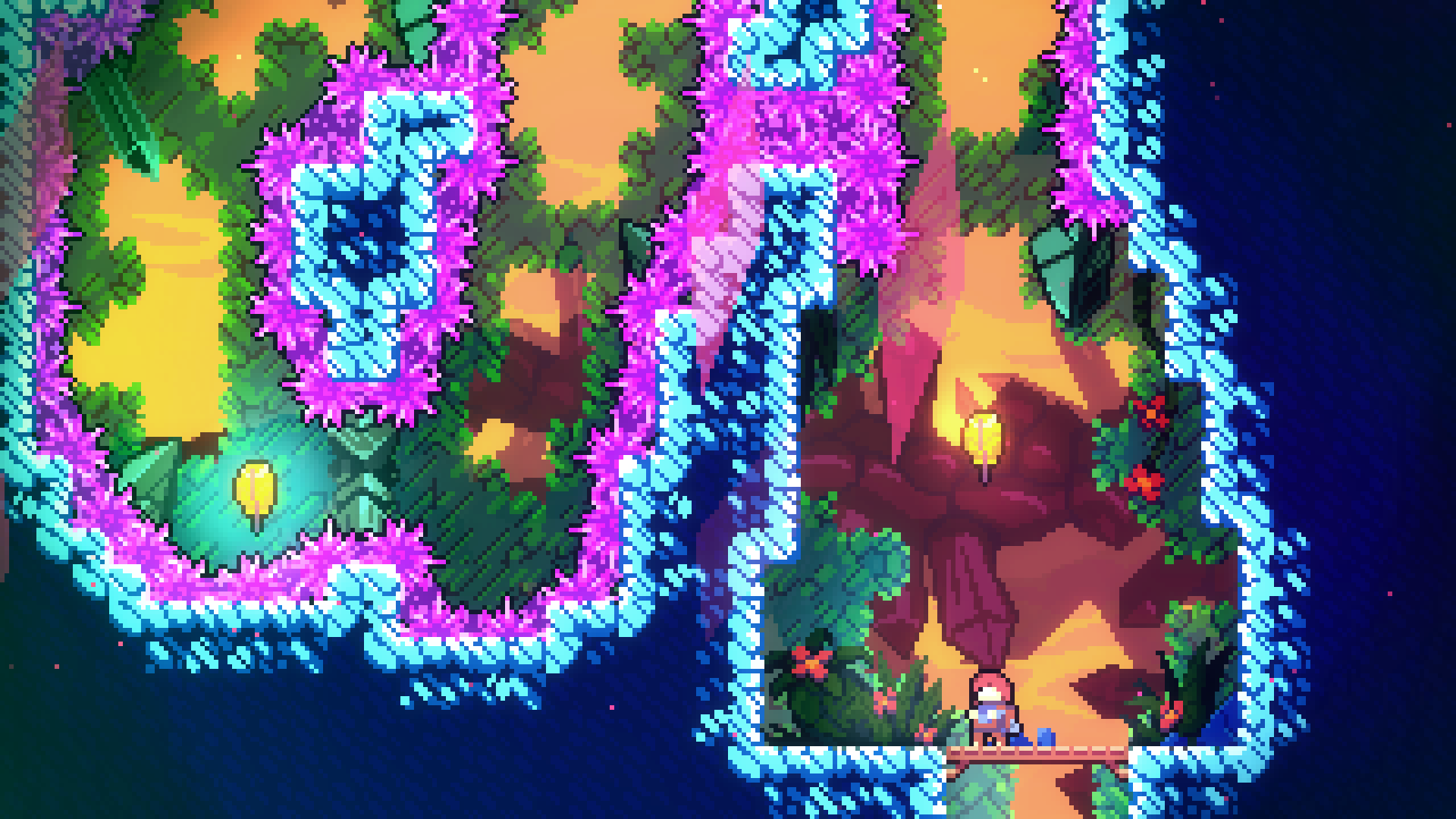
Celeste, 2018
In games like TowerFall (2013) and Celeste (2018), pixel art decisions are inseparable from movement systems. Jump arcs, acceleration, hit feedback, and animation timing are all fine-tuned to reinforce player control. The result is pixel art that feels alive because it is designed as part of the game’s mechanics rather than layered on top of them.
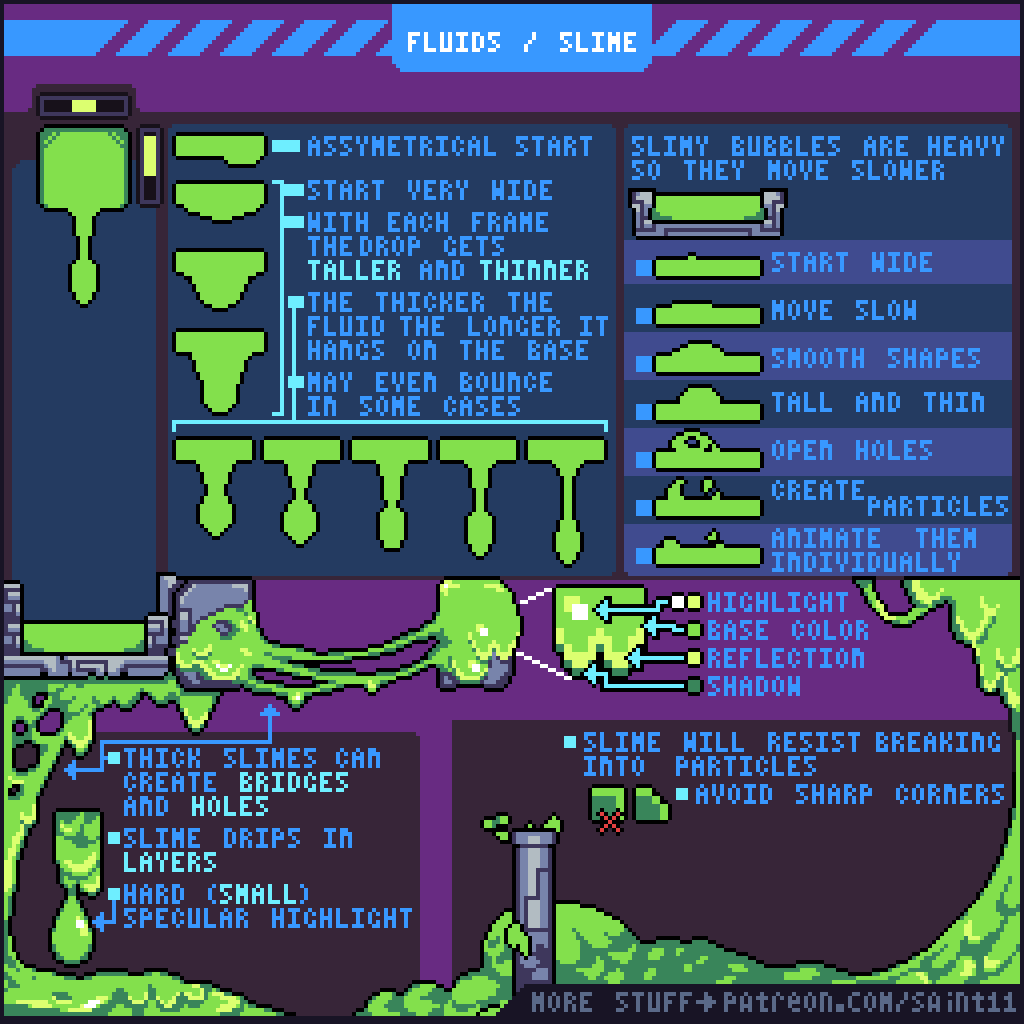
One of Pedro’s many pixel art tutorials
Alongside Slynyrd, Pedro is one of the most influential pixel art educators currently active, though his tutorials emphasize different topics. Where Slynyrd focuses on construction and texture, Pedro’s tutorials and talks concentrate on motion, collision, readability, and player feedback. If Slynyrd is the high school art teacher, instructing pixel artists how to paint happy little trees, then Pedro is the eccentric physics teacher, showing you how to blow them up.
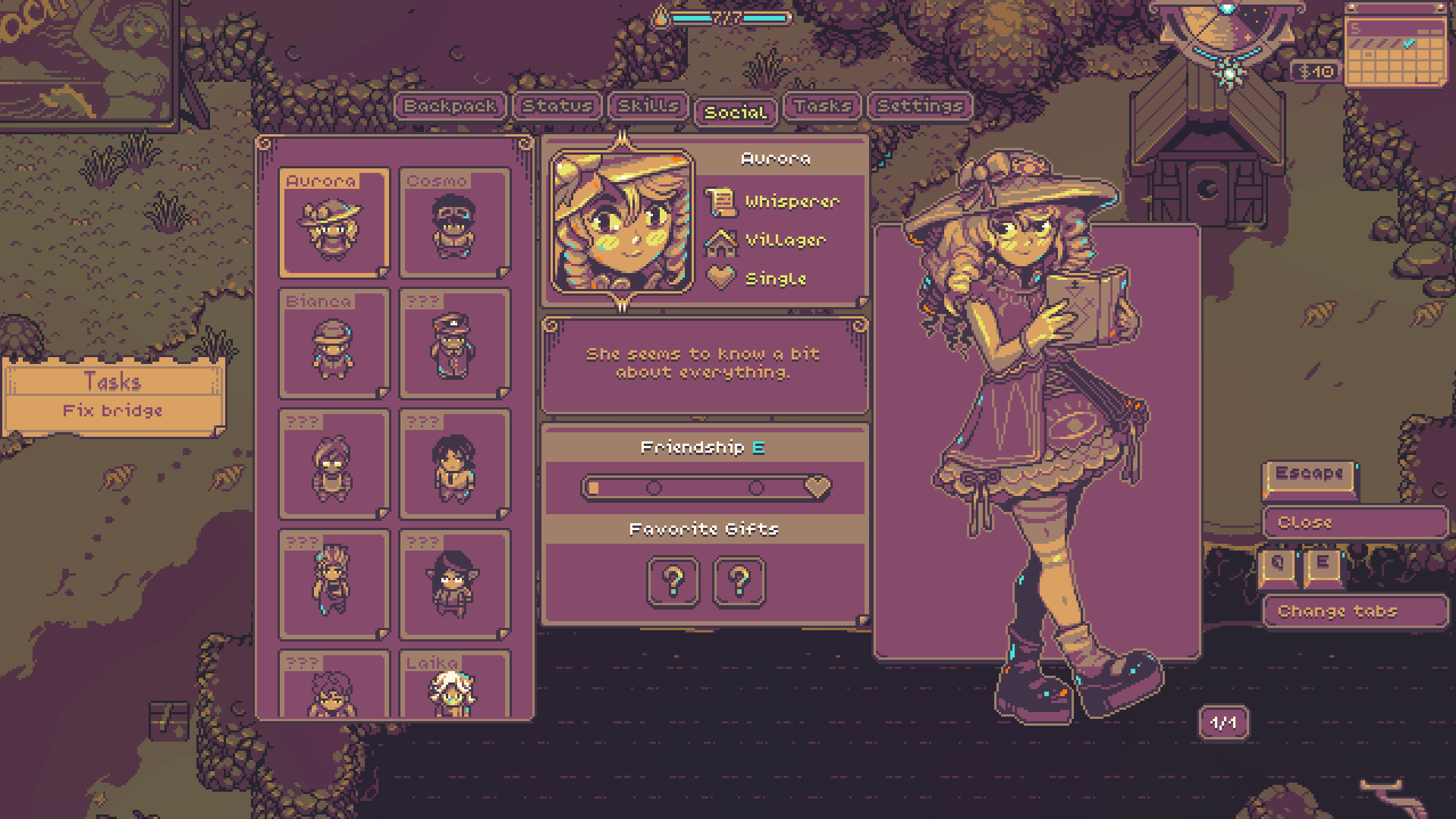
Neverway, 2026
After Celeste, Pedro co-founded the studio Cold Blood with Isadora Sofia and Heidy Motta, and continues to work on games where animation and mechanics are deeply intertwined, including the upcoming Neverway. His career represents a model where pixel art, animation, and design are treated as a single system rather than separate disciplines.
Best for:
Games where movement, physics, and responsiveness are central to the experience
URLs:
Slynyrd - The Pixel Professor (2015–present)
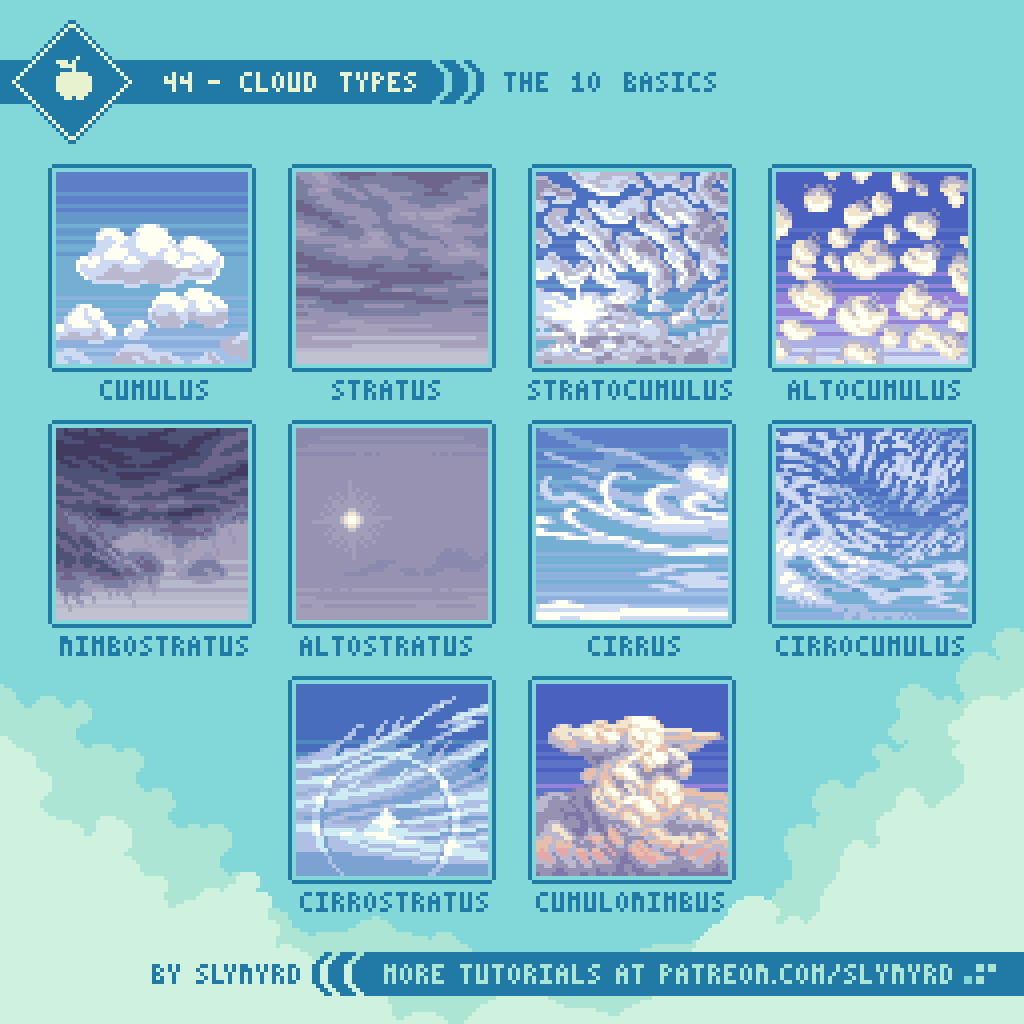
Cloud tutorial from Slynyrd’s Pixelblog
Raymond Schlitter, better known as Slynyrd, is one of the most influential pixel art educators of the modern era. While he has worked on a few games, his largest impact on the medium has come from teaching, through his online “Pixelblog” articles.
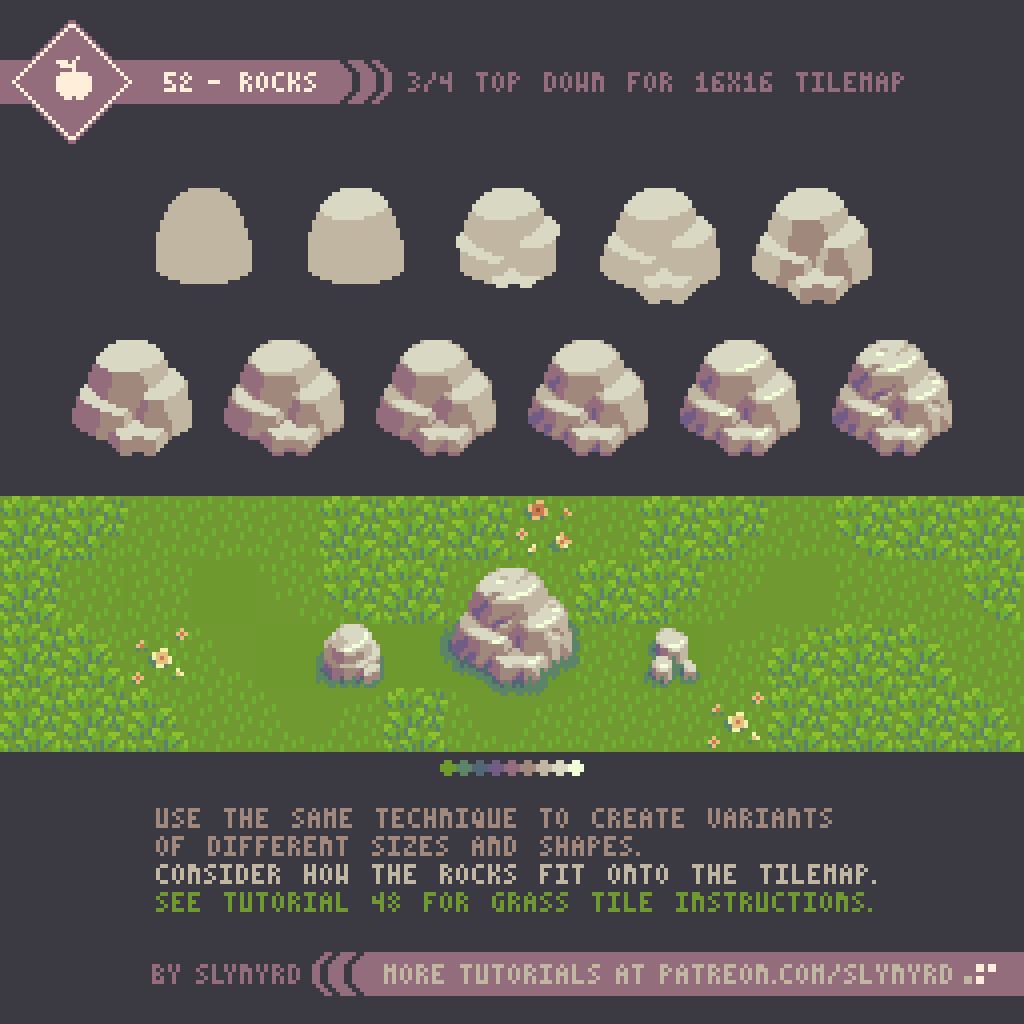
Rock tutorial from Slynyrd’s Pixelblog
Beginning in 2015, and published bi-monthly, his online tutorials have helped define how an entire generation of pixel artists think about construction, volume, and texture. His early guides focused heavily on natural environments: trees, grass, rocks, terrain, and organic forms that are notoriously difficult to render convincingly in pixel art. Rather than relying on shortcuts or surface detail, his approach emphasized structure first, building believable forms through clustered pixels, controlled color ramps, and careful attention to light and mass.
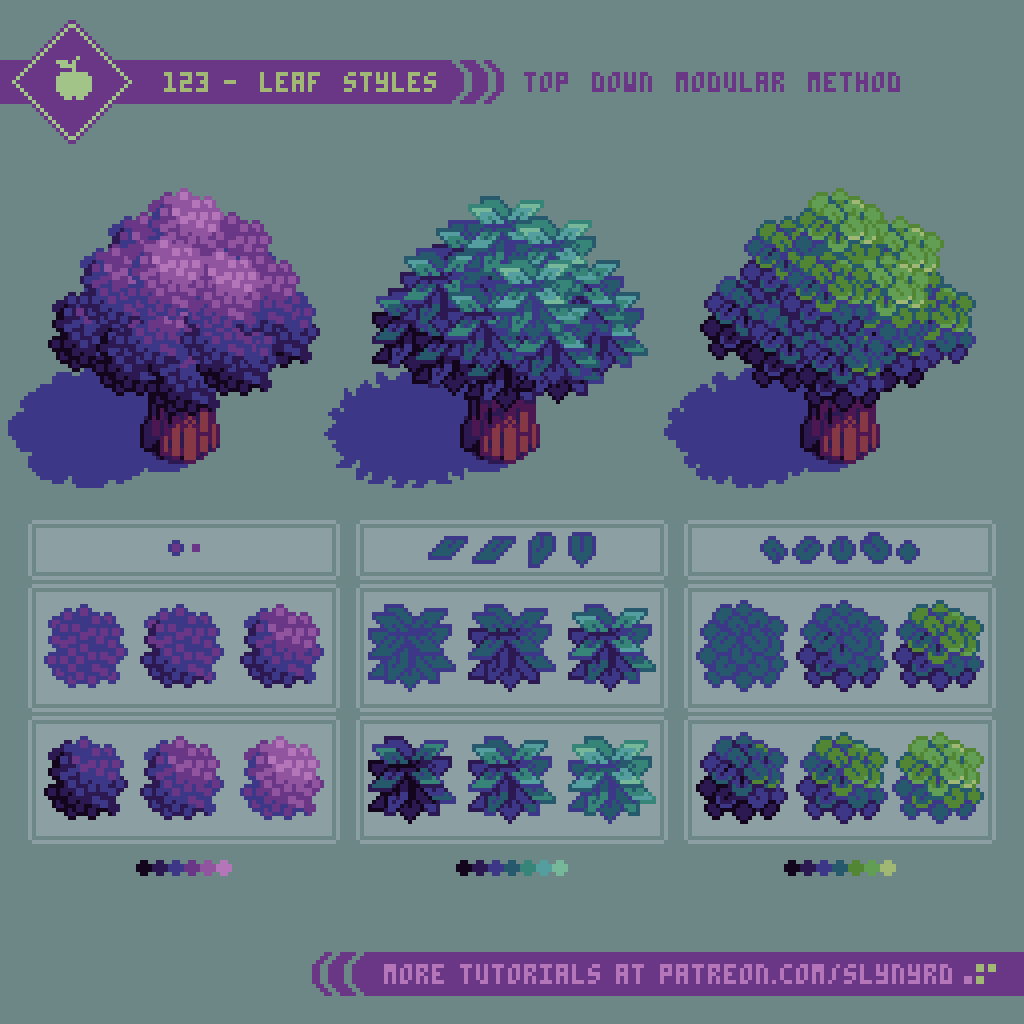
Tree tutorial from Slynyrd’s Pixelblog
Ten years later, Slynyrd has covered dozens of other pixel art topics: animation cycles, architecture, and sci-fi vehicles, to name a few. He has also published his own game, Hyper Echelon, demonstrating his mastery of both environmental work, spacecraft and interface design.
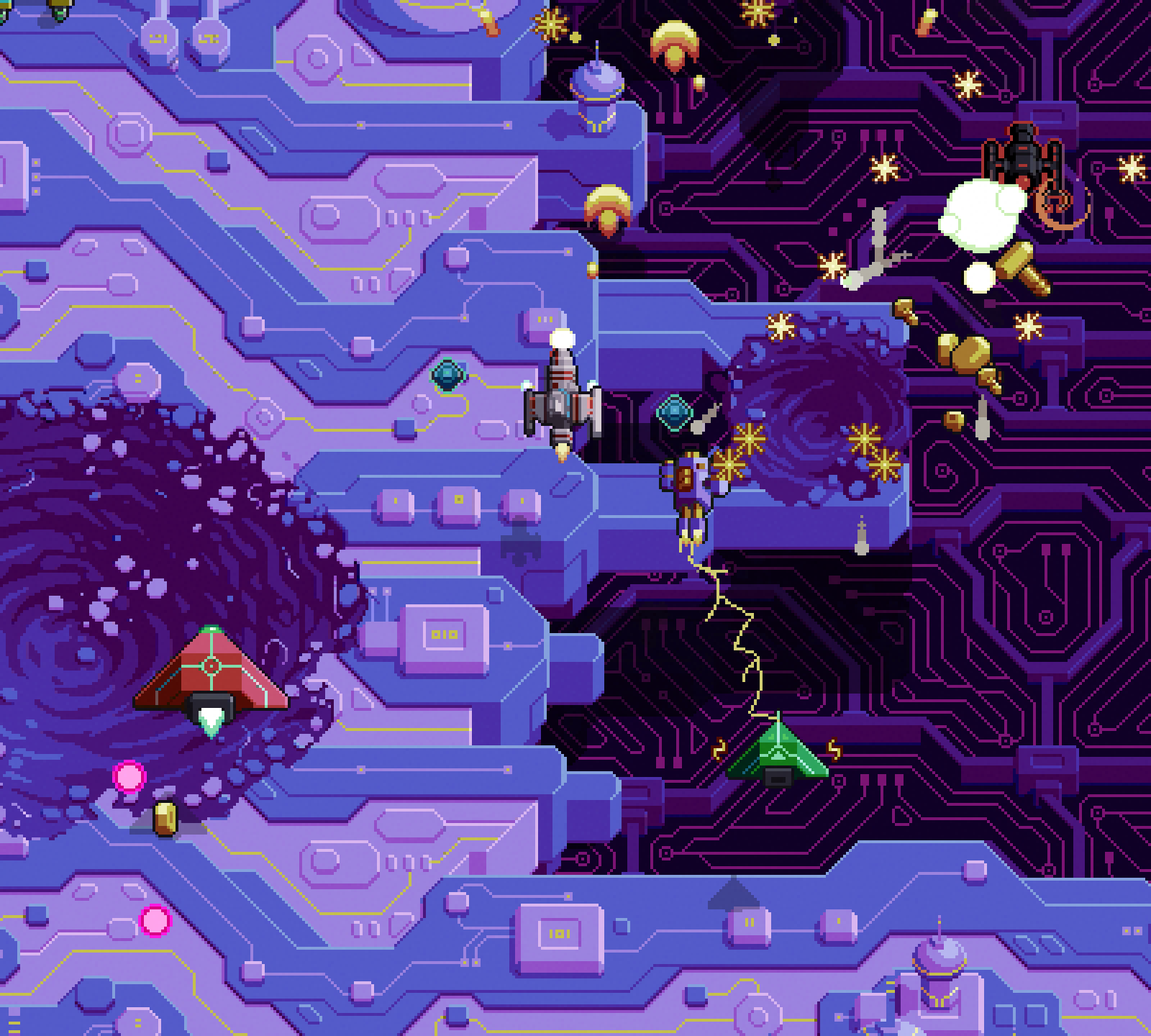
Hyper Echelon, 2021
Best for: Game projects that require strong environment art. Inexpensive asset packs for developers who don’t need custom, bespoke illustration. Beginner pixel artists looking to level up their skills.
URLs:
So Who is the Best Pixel Artist, Really?
The best pixel artist is the one whose skills and experience are the right match for your project. For an historically authentic retro game, that may be a veteran game artist. For animation-driven gameplay, it may be an animator-first specialist. For advertising, editorial, or packaging, it may be a pixel artist with a background in graphic design and art direction.
In my previous article, I outlined how to think about hiring a pixel artist. The goal of this one was to help you identify the kind of pixel artist best suited for your project. If that job is editorial, packaging, advertising, or any project where pixel art needs a graphic designer's sensibility, you can hire a pixel artist with a graphic design background directly through my intake form.