How Much Does It Cost to Hire a Pixel Artist?
What professional pixel art actually costs, and the three factors that determine every quote.
Pixel art carries a pricing problem built into its own technological history: because the style references an era of genuine technical limitation (small grids, tight palettes, low resolutions), people assume the work itself is limited: cheap, fast, and easy to produce. It doesn’t help that hundreds of pixel art hobbyists (with little understanding of real-world applications, client needs, or copyright laws) offer their services for bottom-dollar rates on dubious sites like Fiverr and Upwork.
But the truth is that pixel art is a legitimate illustration style, just like any other, and should be priced in much the same way.
After more than twenty years creating custom, AI-free pixel art for clients like Disney, ESPN, and Hasbro, I can confirm that professional rates are not set by some automated formula or a flat fee per pixel (I would be a millionaire if they were!).
In reality, pixel art rates are set by these three factors:
Complexity
Usage
Client Revenue
Anyone hiring a pixel artist, or any professional illustrator for that matter, needs to understand how those rates are actually built.
For the practical mechanics of finding and briefing an artist, I covered that ground separately in How to Hire a Pixel Artist.
The Three Pillars of Pixel Art Pricing
Every quote I deliver rests on those three factors and together they can move a project from just a few hundred dollars to tens of thousands. And contrary to what you might think, pixel count is often the least significant.
Complexity (and the Hidden Intellectual Labor)
When we talk about this factor in pricing, another word that is often used in its place is execution, because what we’re really talking about is the time it will take the artist to complete the job. Yes, canvas resolution and the raw number of pixels drawn are an obvious starting point; a larger canvas, or a sequence demanding dozens of individual animation frames, consumes a clear and measurable amount of production time. What clients routinely underestimate is the cognitive labor that happens before my pixel pencil touches the grid.
A clean sketch or a precise description of the desired result saves enormous time. A dense, abstract article handed over with instructions to distill it into one cohesive image does the opposite: that conceptual problem-solving is a substantial portion of the work, and it is invisible in the final file. Complexity also scales with how deeply the work has to absorb a client's branding and visual voice, and with the expected number of revision rounds. A client who trusts the process and requests minimal changes is a fundamentally different engagement from a multi-stage corporate pipeline running on endless iteration.
Usage (and the Commercial Value of the Work)
Commissioning art is never simply the purchase of an artist's hours. It is the purchase of what the art will do for a business, and the scope of that usage sets the baseline value. An asset created for a single social post that expires in twenty-four hours is not priced like an illustration on a commercial product shipping hundreds of thousands of retail units, or an advertising campaign broadcast globally.
An even more important part of pricing usage is rights. This is where licensing enters, ranging from a single restricted use up to unlimited rights or even a full buyout of copyright. A buyout, or work-for-hire agreement, transfers total ownership of the image to the client. Independent artists generally avoid it, since it strips away all future value (through reuse, resale or even royalty), though a sufficient premium can make it well worth the trade. With major intellectual property, however, the question is moot: my animated Star Wars: Skeleton Crew stickers for Disney operated under work-for-hire because there was no alternative. Disney must own the copyright to its IP, and clients at that scale carry the budgets to make the exchange fair. More on that in a moment.
Client Revenue (and the Cost of Bureaucracy)
The third pillar tracks the size of the company doing the hiring. A local city magazine cannot be charged what a global media conglomerate is charged. Part of that ties back to usage, since larger companies command wider reach, but it also reflects their financial reality and structural demands.
Large corporations invest heavily because they recognize and require top-tier quality. When a major brand approaches a professional, it is because it wants the best execution available, and the price should reflect that standard. And as I mentioned above, under the section on complexity, bigger companies also run heavier processes: more stakeholders, more approval chains, more revision rounds, and longer administrative timelines. That overhead never shows up in the final deliverables, but it always shows up in the quote.
No, But Really, How Much Does Pixel Art Cost?
To anchor this in real numbers, the projects I have taken on across my illustration career have ranged from only $500 to over $45k. I know elite illustrators who have commanded even more, and too many naive beginners who have accepted far less.
The four projects I discuss below—with a range between $1,000 and $15,000—show how the three-pillar framework determines an estimate.
The Buyout: Hasbro
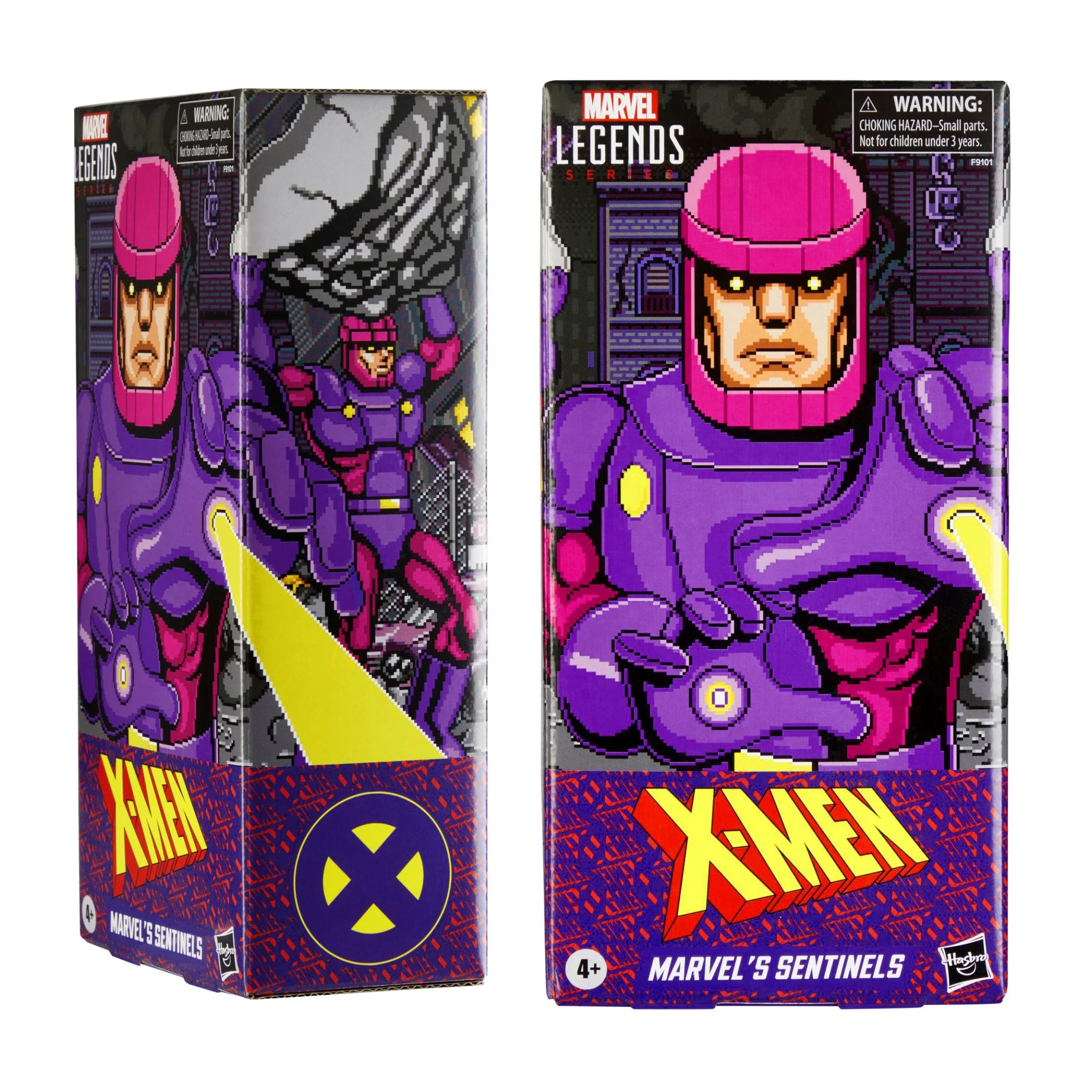
Complexity: Medium / Usage: Very High / Client Revenue: High
The Hasbro Marvel Legends packaging remains one of my favorite client projects: pixel art portraits for the X-Men Sentinels release, with artwork referencing the 1992 X-Men arcade game I grew up playing. The alignment between the brand and my own creative history brought unquantifiable value to both the client and myself. But since you’re probably reading this because you want the value quantified: the illustration commanded a fee of $5,500.
This is on the higher side for a single image, but what really drove the fee up was the usage. Because Hasbro was licensing the IP from Disney/Marvel, they required a full buyout, meaning I forfeited all copyright and even legal authorship of the image. In addition, the usage was for a consumer product, so my art was literally a part of what every customer was buying. In this case, however, the buyout alone pushes usage to the top of the scale, regardless of how the art is ultimately deployed.
Client revenue also plays a part, with Hasbro making nearly five billion dollars in 2025, but with lower profit margins on licensed toy properties this has less impact on price than usage.
Deep Pockets: Disney

Complexity: Medium / Usage: Very High / Client Revenue: Very High
Working with Disney, the multinational conglomerate that Hasbro was licensing Marvel IP from in the first place, looks just a bit different. They hired me for a series of custom animated GIFs used as stickers on their official Star Wars accounts.
Visually these were tiny: low-resolution, original 8-bit characters with compact animations, closer to a classic Super Mario sprite than to anything high-resolution. From a complexity perspective, it was actually similar to the Hasbro project, but instead of one medium-level illustration, it was ten simple animated GIFs. Each one paid $1,500, so the project totaled $15,000 for artwork smaller than an icon on your phone's home screen.
Why nearly three times the Hasbro project? Usage was effectively the same. Even though this was for promotional purposes rather than for a consumer product, they still required a buyout since it involved their Star Wars IP.
What separates the two projects is client revenue. Disney posted $94.4 billion in fiscal 2025, nearly twenty times Hasbro's revenue, and Star Wars is a franchise they own outright rather than license, so none of that margin is being shared further up the chain. Turnaround played a part as well: each sticker was made under NDA during the week leading up to the episode it promoted, and that combination of secrecy and compressed scheduling is standard for clients running a global release calendar.
A Tale of Two Type Treatments: Polygon vs Target
If it’s not clear by now that usage and client revenue have a much higher impact on price than complexity, I want to show you two very similar-looking examples that had vastly different budgets. Both of these projects were less complex than the Hasbro and Disney work, which does put a lower baseline on each fee, but what separates these two from each other has nothing to do with complexity at all.
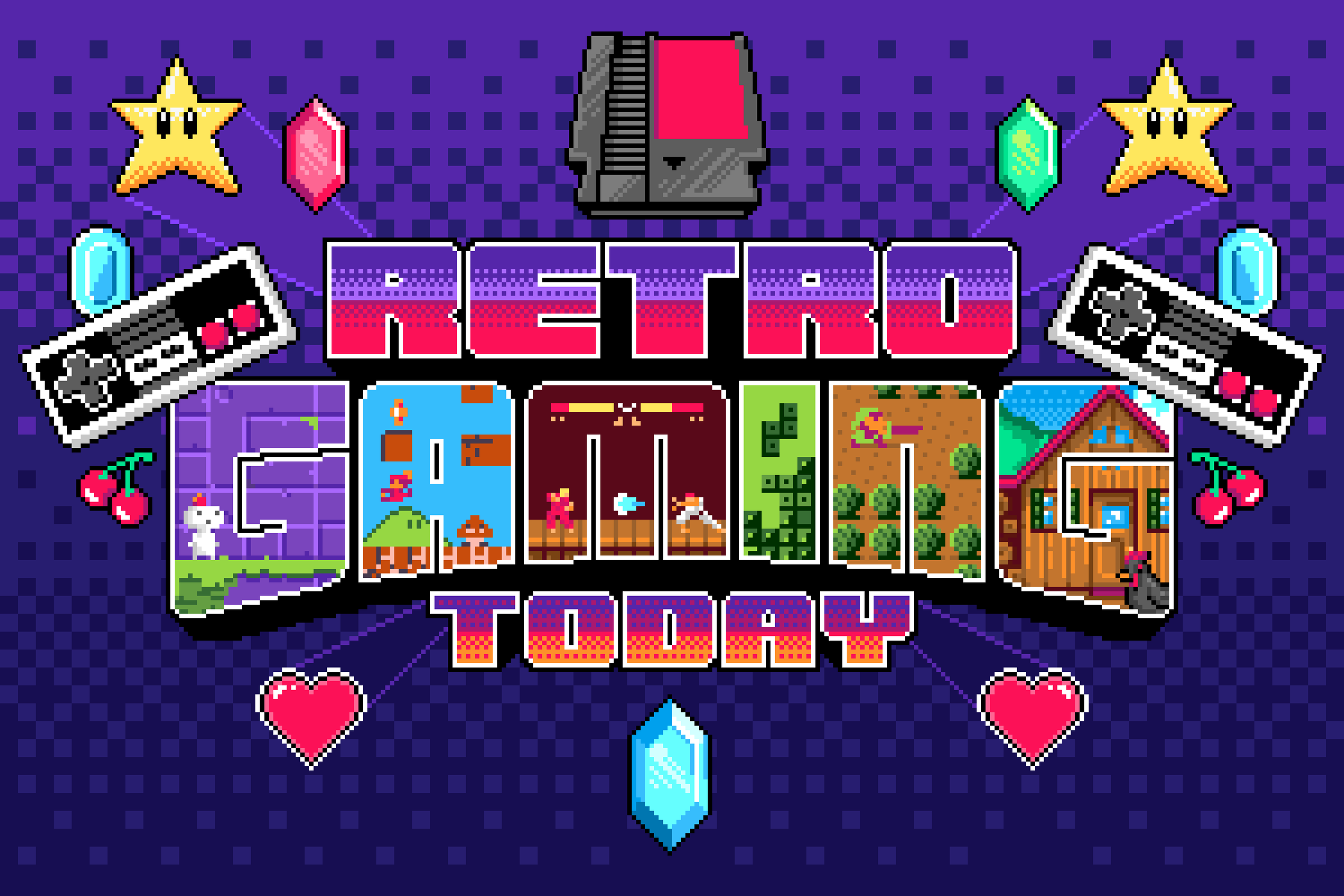
Complexity: Low / Usage: Medium / Client Revenue: Medium
This typographic illustration for Polygon, essentially “cover art” for a package of articles on the state of retro gaming, only paid $1,000 (and I threw in some spot art, which I pulled from the main illustration, for free). Editorial illustration typically pays lower fees than many other industries do, though prices can vary quite a bit depending on distribution and the number of eyeballs that end up on a piece.

Complexity: Low / Usage: Very High / Client Revenue: Very High
On the other hand, these two gift card designs for Target, which are very similar and even a little bit simpler, paid four times as much at $4,000 each. Target generates far more revenue than Polygon, and these illustrations were used on a retail product rather than a free article supported by advertising, so the budget was substantially higher despite the comparable complexity.
Usage and client revenue are often joined at the hip, since bigger companies tend to buy broader rights for wider deployments. They are still worth understanding separately, as the Hasbro and Disney comparison showed, where usage was identical and revenue did all the work.
One thing to note here regarding the similar complexity rating: despite looking simpler, these took about the same amount of time as the Polygon illustration. Target ran more rounds of feedback, though minor, where Polygon approved my first take. Extra rounds are very common with large corporations, and that time counts toward complexity just as much as pixel count does.
How to Get an Accurate Quote from a Pixel Artist
The fastest way to get a real number out of any illustrator, pixel artist or otherwise, is to first answer the questions raised by this article’s three pillars of pricing.
How complex is the work?
If you can approach an artist with a clear set of deliverables, timeline, and iteration process, you’ll get a far more accurate quote than simply telling them you “want to make a pixel art game.”
What type of usage do you need?
Letting an illustrator know how the art will be used, for how long, and what type of rights you want granted will help you both to figure out the right price up front, rather than be hit with unexpected fees later.
Who is this for?
Sharing the end client up front will keep both parties honest, providing an estimate that is fair to everyone. Billion-dollar companies should want to spend top dollar on their art; trying to nickel and dime an illustrator will only result in lower quality work, even from elite artists. Conversely, illustrators do understand that smaller businesses have less to work with and will typically provide their services at a reduced rate, as long as those companies are willing to negotiate on usage and complexity.
Pixel art is a professional discipline with real commercial value, and it should be priced like one. The best pixel artists will know how to give you an accurate quote. If you already know your answers to the three questions, let’s talk!